
Greater Moriches coverage is funded in part by Peconic Bay Medical Center, a place that is here for life’s most defining moments.
For members of the Unkechaug Indian Nation, a visit to the dentist has never been easy. For many, it hasn’t even been possible.
The hundreds of people living on the Poospatuck Reservation in Mastic have struggled for decades to access even basic dental care, from routine screenings to cleanings.
In the 1990s, members were given insurance cards through the American Indian Health Program. But the only dependable institution accepting their coverage and providing care has been the Stony Brook School of Dental Medicine, a long and potentially expensive trip for the many members who rely on public transportation.
“Something as simple as transportation can be the difference between someone receiving dental care and putting it off,” said Maria Chamorro, executive director of health services for the Unkechaug Nation.
Olga Harris, who has lived in the community since the 1980s, said financial barriers have left some with no choice but to “keep to themselves and just deal with it” when it comes to oral health issues.
That is, until now.
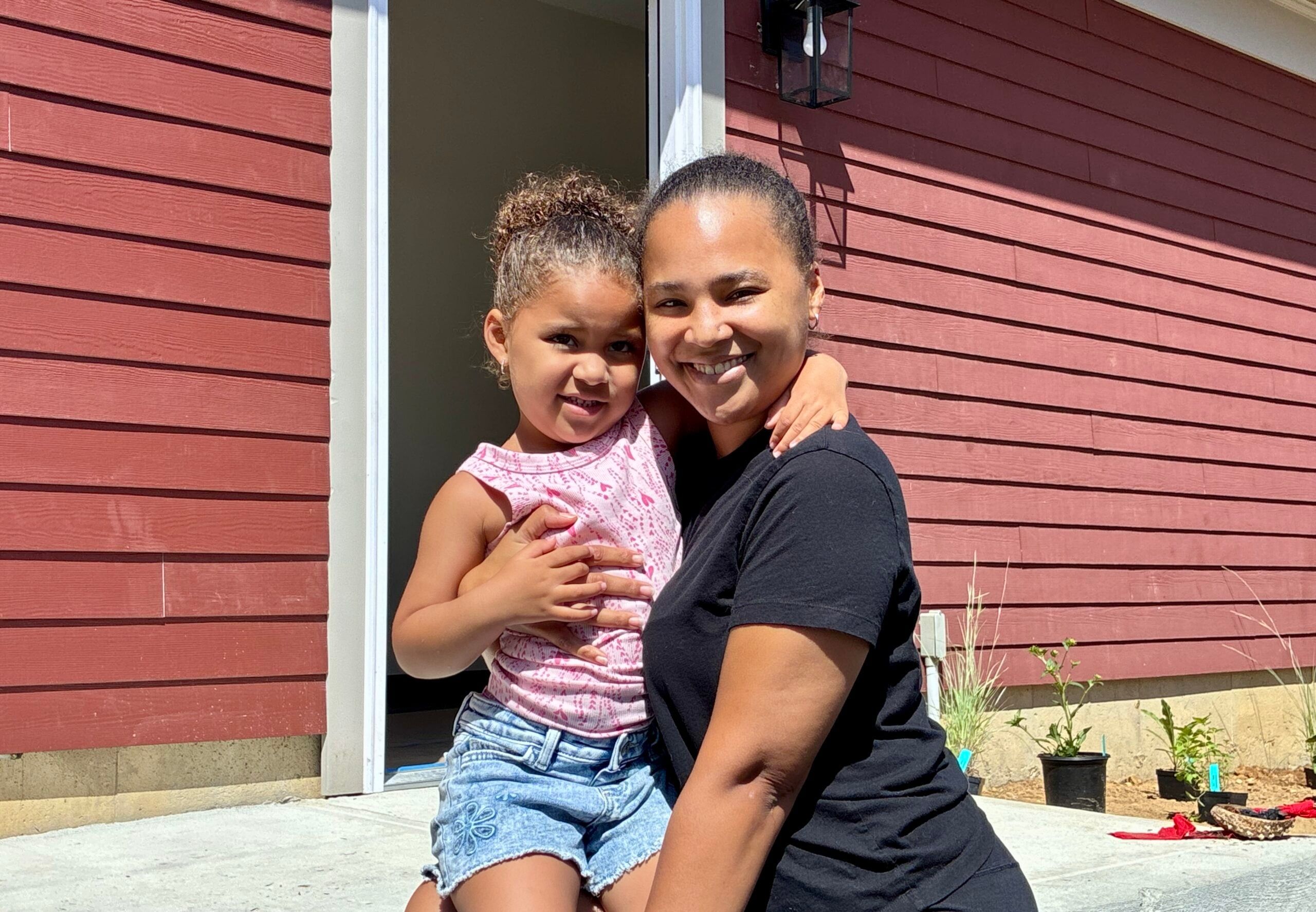
Top: Janida Magee and daughter Roselia, 2. (Credit: GLI/Kevin Redding)
Bringing dental care home
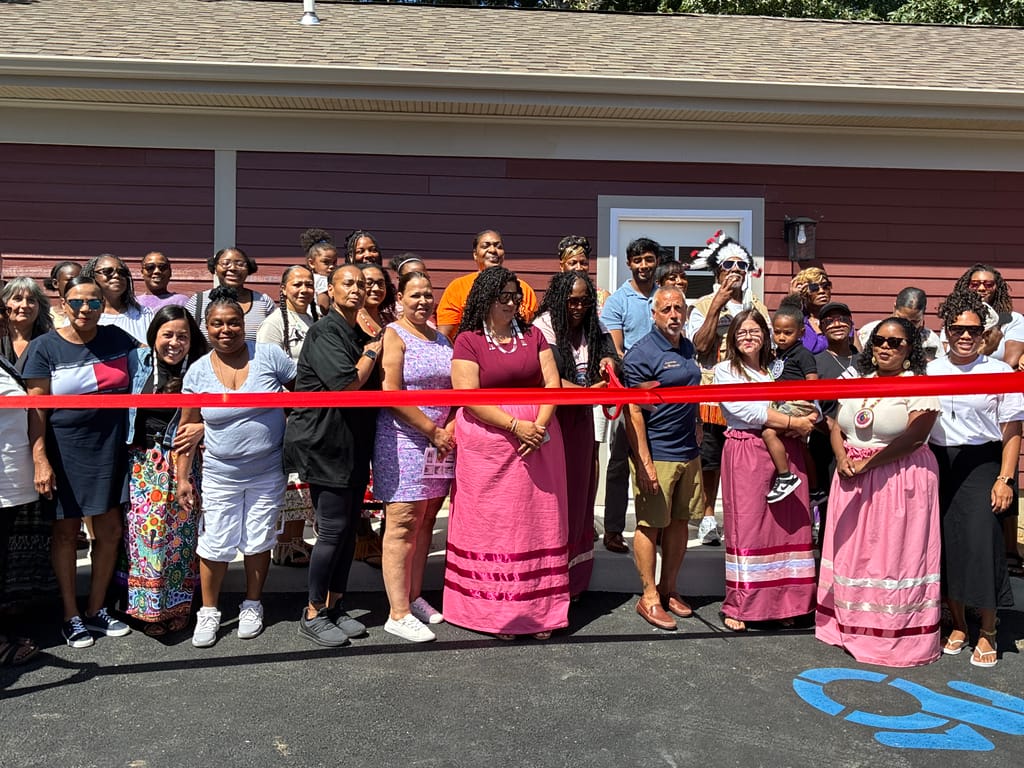
On Saturday, Aug. 29, members gathered on the 55-acre reservation for a ribbon-cutting ceremony celebrating a new state-of-the-art dental clinic on their territory.
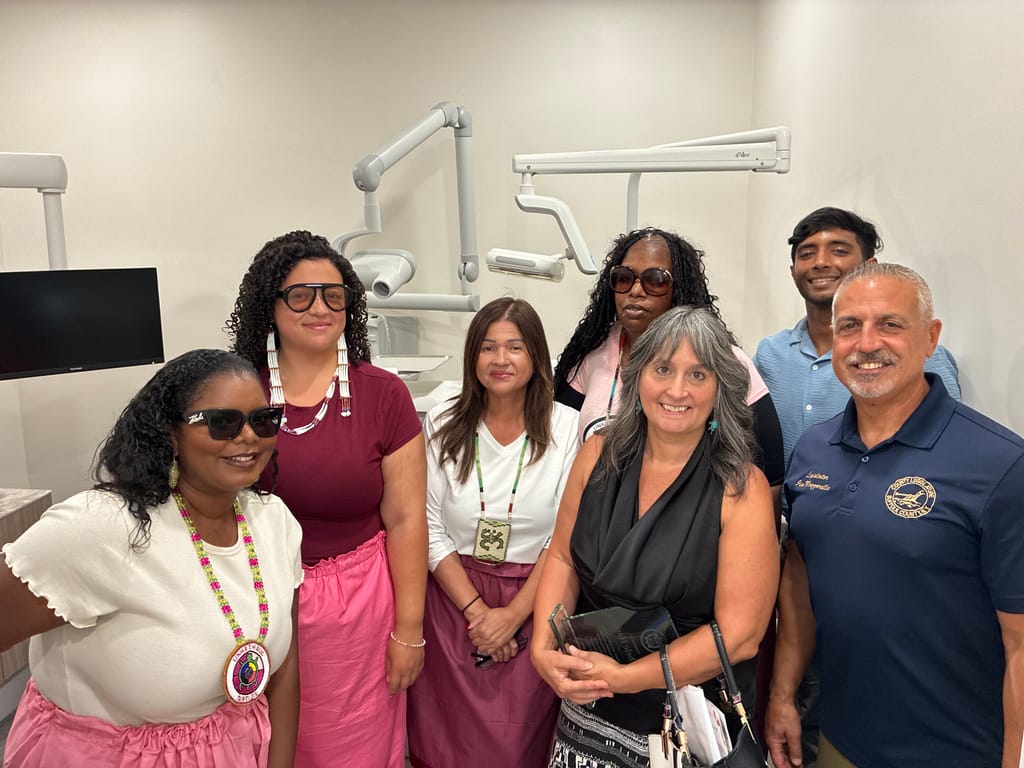
The 1,080-square-foot facility, already stocked with dental chairs and equipment, is expected to officially open Oct. 1. It will bring preventive oral health services within walking distance for residents, and patients will not be billed, according to Chamorro.
“For the Unkechaug Nation, this is more than a building … it gives us the opportunity to provide quality and culturally appropriate care in a place that is familiar, comfortable, and belongs to us,” she said.
Chamorro was among a small group of people who helped turn the years-long effort into reality, including Latasha Austin, the Nation’s land trustee, and Destiny Yancey and Mariah Magee, members involved in shaping the clinic’s infrastructure.
Their work culminated in a five-year grant through the New York State Department of Health providing $550,000 annually for dental care.
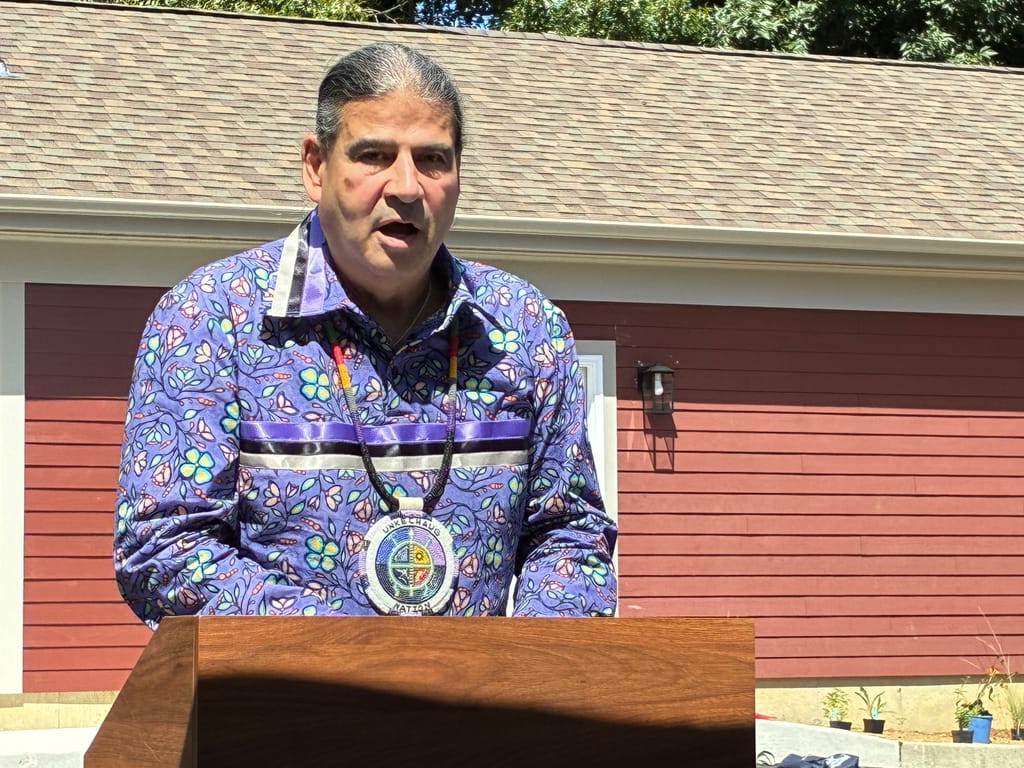
“We are people who knew what our community needed, believed we could make it happen, and then had to figure out everything that came along with it,” Chamorro said. “Long after today is over, this clinic will still be here. Our children will walk through these doors and hopefully their children will too. We have come a long way to get here and this is only the beginning.”
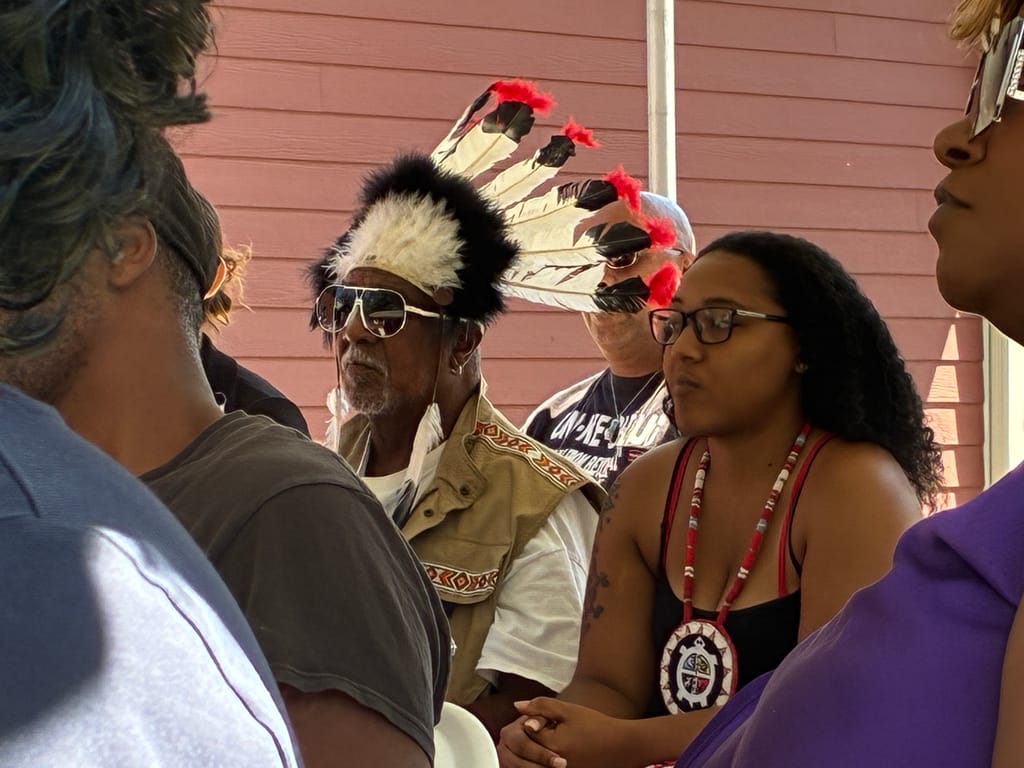
The ceremony opened with an Eastern Algonquin prayer led by Chief Harry B. Wallace and included remarks from Suffolk County Legislator Jim Mazzarella and Michele Hamel, the retired director of First Nations Health and Wellness.
Afterward, attendees got their first look inside the clinic.
Standing beside one of its dental chairs was Dr. Vivek Viswanath, a Stony Brook School of Dental Medicine graduate who has been hired as the clinic’s on-site dentist.
Viswanath, 30, previously cared for patients from the Unkechaug and Shinnecock Nations during his residency. Members said his cultural sensitivity and compassion made him “a good match” for the community.
“What I value in dentistry is being part of the community and having the chance to actually form one-to-one relationships,” Viswanath said. “Dentistry gets a bad rap sometimes, but at the end of the day it is a vital part of everyone’s health. It’s really a privilege to be one of the early people involved in trying to create an impact here.”
Knowing how intimidating a dental appointment can be, particularly for someone who hasn’t been to a dentist in years, Viswanath said building trust will be essential.
“I think the most important thing is to meet people where they’re at,” he said. “As the dentist, my job isn’t to assume or dictate or judge anything. I’m here to educate, advocate and treat. When people come, I’ve got to listen and be someone they can trust. I want to help them achieve the best possible health outcomes and increase opportunities for them.”
Among the community members touring the clinic was Janida Magee, who grew up on the reservation.
“You know it’s been tough and could be very expensive, so it’s nice that they can bring it here … it’s definitely a big change,” Magee said, looking down at her 4-year-old daughter, Roselia. “It’s going to be good for her. Instead of traveling all the way to Stony Brook, she can get her teeth checked right here. And now I’m like, I might have to come here too. I love this here.”
Gilbert Higgins, 71, who grew up on the reservation in the 1950s and ’60s and never saw a dentist in his youth, called the clinic “a blessing.”
So did Tania Edwards.
“Our kids will now know the dentist, don’t gotta go far, don’t gotta catch a ride … it’ll be really good,” Edwards said.
She also pointed to the dramatic changes the community has experienced over the past decade, including an influx of dispensaries that have become a major source of income while bringing steady traffic to the reservation.
“Hopefully it’s only the beginning of better things to come,” Edwards said. “The kids don’t have anywhere to play. We need to have our own health center. Hopefully things will come back around.”
A bigger vision for health care
According to Yancey, that’s the larger goal.
The Nation ultimately hopes to expand health care available on the reservation with medical and mental health services.
“The goal is to continue bringing the care here,” Yancey said. “We want to ask the community what we’re looking for as a whole and then start putting in grants. It’s nice to know that as the years go on, we’ll be able to really bring more that’s on the outside to the tribe. We don’t have to struggle to find the services you need.”
Your Long Island news, delivered.
Subscribe to the GLI Newsletter — its free