


Greater Long Island coverage is funded in part by Toresco & Simonelli, a boutique injury and family law firm in West Islip. They fight for their clients. Click here to get in touch.
To effectively stomp a spotted lanternfly, approach it from the front.
Grab your flip-flop, because New York has now fully entered its fifth year dealing with invasive lanternflies — and it’s on us to help control the populations.
While the lanternfly isn’t harmful to humans or pets, it poses a serious threat to gardens, vineyards, parks and even local businesses. The adult insects, which typically emerge in late summer, represent the most destructive stage and pose the biggest risk to agriculture.
In 2022 and 2023, most sightings were reported in the five boroughs. But last year, the infestation pushed farther east across Long Island.
“I think you will continue to see the trend — and it’ll be interesting if it plays out this way — that it continues to move a little bit farther east on Long Island,” said Christopher Logue, director of plant industry at the state Department of Agriculture and Markets.
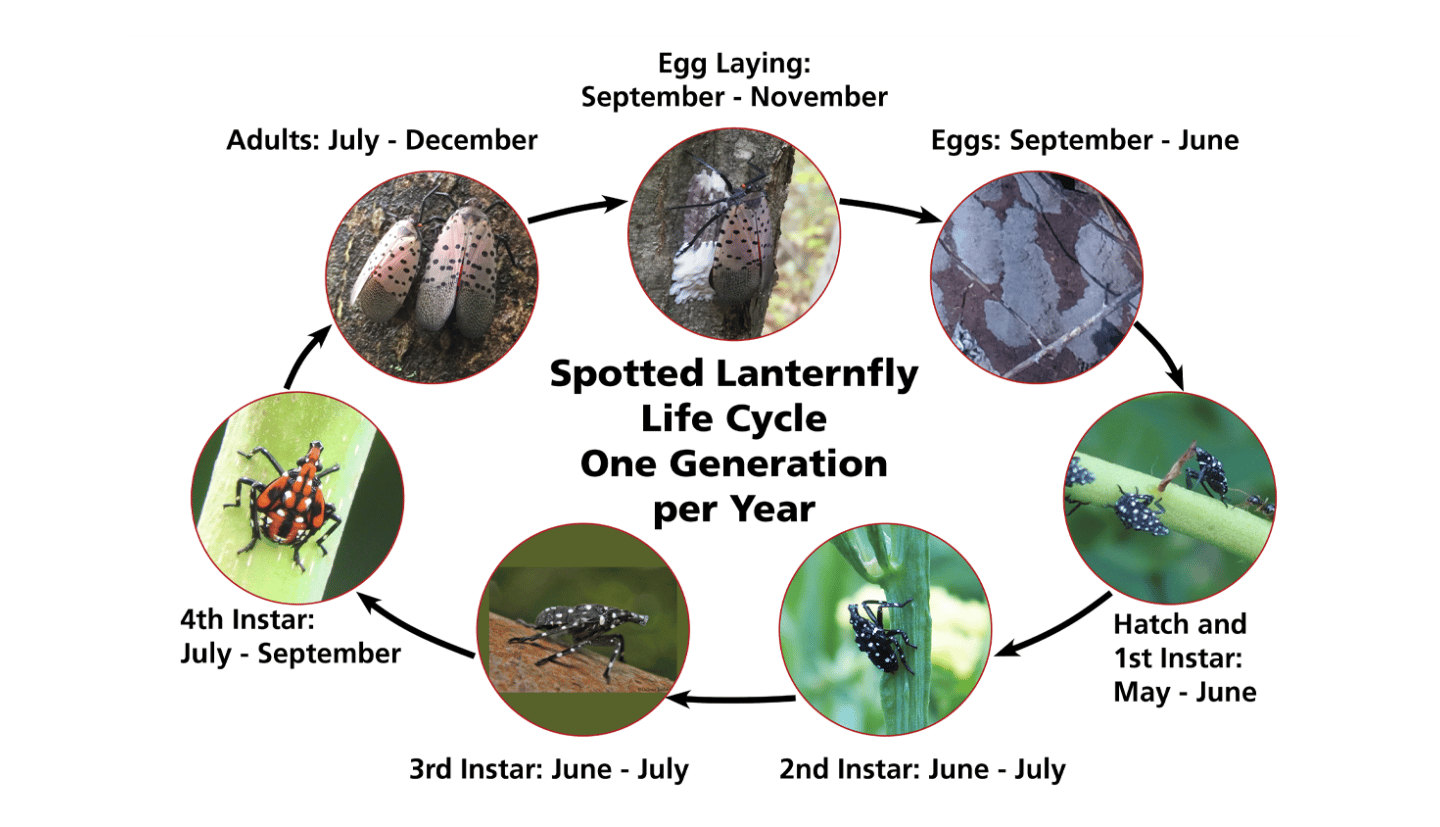
Black and white nymphs started hatching in May from egg masses laid last fall.
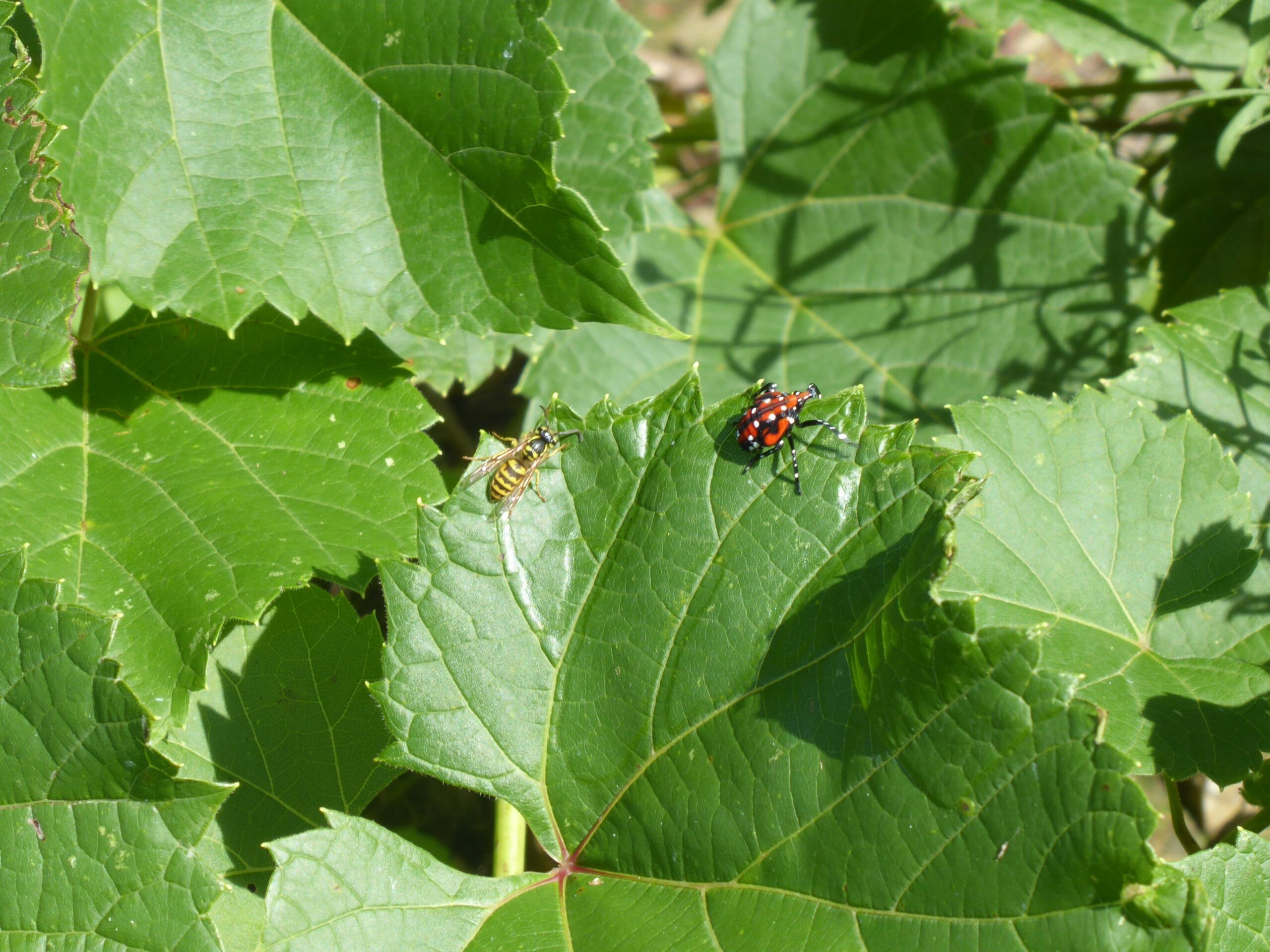
And now, into the thick of summer, the red, instar-stage nymphs can be seem to be everywhere across Nassau and Suffolk. (The nymphs are red from July to September before transitioning into adults, see chart below.)
These “teenage” spotted lanternflies are most often seen on low vegetation, tree trunks, concrete walks and patio furniture.
You’ll also find plenty in your pool, if you have one.
Experts say early detection and removal of these nymphs can help reduce overall population growth heading into later summer.
Vineyard threats & efforts to manage
According to entomologist Daniel Gilrein of the Cornell Cooperative Extension of Suffolk County, lanternflies haven’t reached threatening levels in eastern Suffolk vineyards yet. But he cautioned that the population is still expanding.
“Vineyard managers are well-informed and watchful,” Gilrein said. “I expect impacts to ultimately be minimal to this area.”
Grapes are among the lanternfly’s preferred targets, and significant damage has already been documented in Pennsylvania vineyards. But New York grape growers were warned two springs ago, and Logue said the industry now has a “good system down on how to manage them in the vineyard.”
Predicting where lanternflies will appear isn’t easy. Factors such as the number of egg masses laid and their viability in the spring and summer influence population size.
Right now, the region is in the early stages of juvenile lanternfly hatching. According to USDA predictive maps, Suffolk is currently in the 0 to 50 percent range for nymph emergence.
“If you can kill it, if you can scrape an egg mass, if you can vacuum the adults — all those things make a difference going forward,” Logue said.
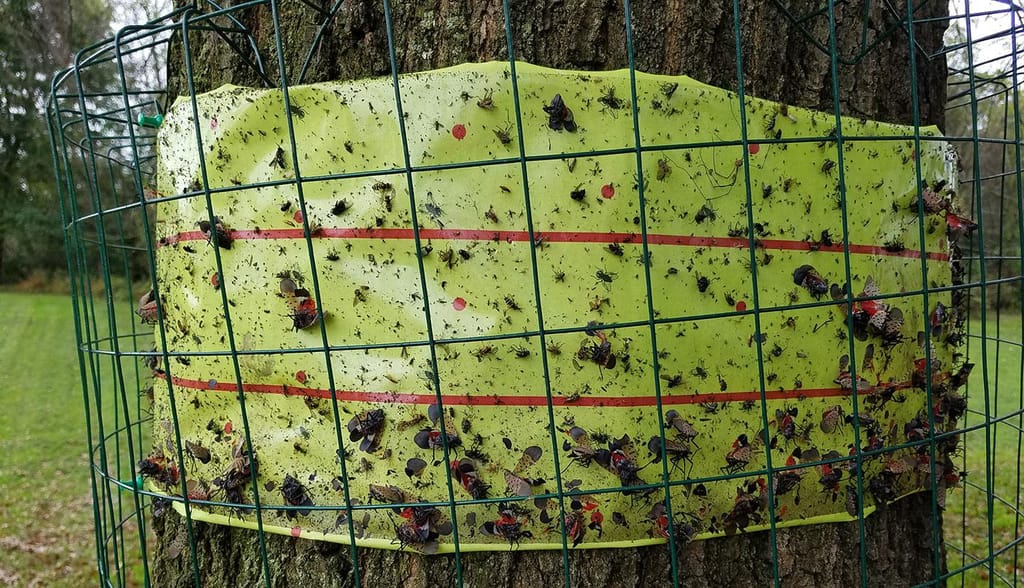
The state also uses traps to manage and contain infestations.
The long-term outlook
Later in the summer and into early fall, Gilrein recommends using a shop or backpack vacuum to remove lanternflies from landscape plants such as red and silver maples, walnut, tree-of-heaven, willow, birch, grape and hops.
“I believe this insect is here to stay,” Gilrein said. “But observations from other areas where it has been established longer suggest the populations do moderate over time, and the numbers seen in any particular area vary considerably too.”
Native to China and southeast Asia, the spotted lanternfly was first identified in the U.S. in 2014 in Berks County, Pa., according to the National Park Service.
And despite its name, it’s not a fly at all, but a plant hopper more similar to a cicada.
Natural predators include spiders, praying mantises and wheel bugs.
Work is ongoing to identify effective biological controls that could eventually reduce the impact of the invasive species. Logue said researchers are exploring the use of parasitoids to naturally control lanternflies, but the solution isn’t ready yet.
“The research looks positive,” he said, adding that public reports have played a major role in tracking the insects’ spread. He encourages residents to continue reporting sightings through the fall by emailing:
Top, featured: The spotted lanternfly in its 4th instar nymph (red body) stage. Credit: Photo by Karin Kim on Unsplash

Your Long Island news, delivered.
Subscribe to the GLI Newsletter — its free