
OUR SPONSOR

Greater Babylon coverage is funded in part by The Argyle Theatre, where Broadway comes to Babylon. Click here for tickets to Annie, Nov. 13 – Jan. 4.
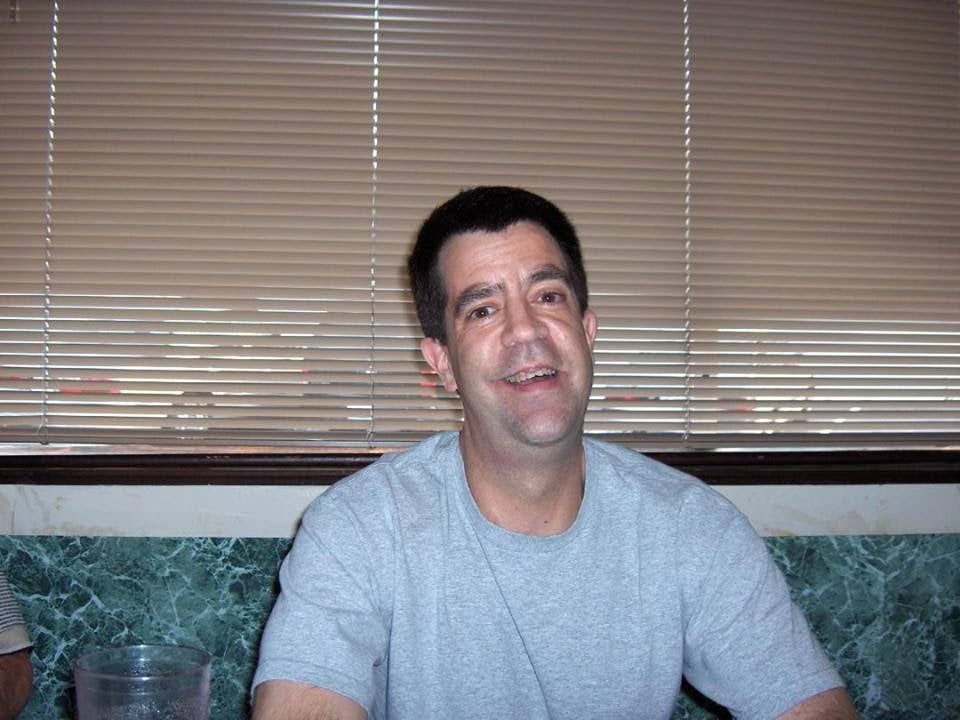
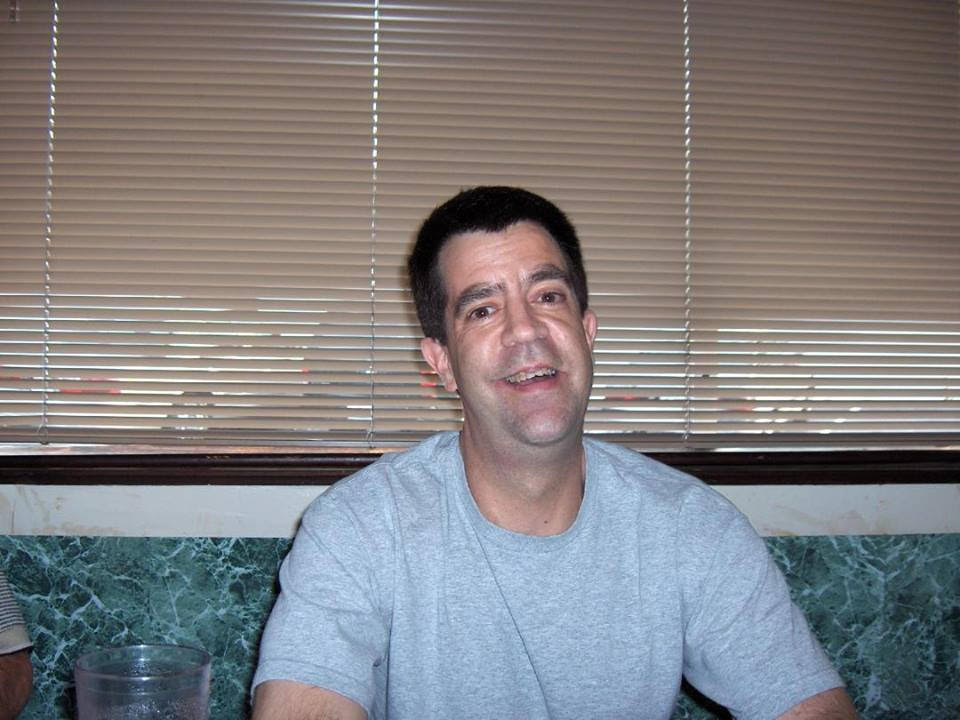 It’s not that often you meet a diehard Boston Red Sox fans here on Long Island. It’s even rarer to meet one as beloved as the late Laurence Swasey of Babylon.
But “Larry,” as we called him, was known to welcome friends and neighbors into his Whalers Cove home anytime the Sox were playing — even though were rooting for the other team.
This includes former Whalers Cove mail carrier Tom Cavaliere, a self-proclaimed “huge Yankee fan” who often ribbed Larry about his Sox fandom in the 10 years he worked his route in Babylon.
“We went back and forth on that and various other things, all with love,” Cavaliere said in a Facebook post. “In any event, he was one of the most grateful persons I ever met and I was better for knowing him.
Larry, who lived in Whalers Cove for more than two decades, died on October 20, 2017. He was 55 years old.
But nobody expected Larry to live that long.
Not by a long shot.
Larry was the youngest of five Swasey siblings. He was born in North Carolina in 1962, premature and purple, with a hole in his tiny heart that would require multiple surgeries. His family relocated twice in his childhood years, first to the Boston suburb of Lynnfield, and then to Central New York.
The two surgeries he had as a child allowed him to grow up as an active kid, playing street hockey with his neighborhood pals in Lynnfield, then becoming an adept high school lacrosse player in Manlius, N.Y. He eventually played lacrosse for SUNY Potsdam.
story continues below photo
“He had to play goalie because he wasn’t able to run as much as needed to play forward,” said his sister, Susanne Bice.
Though he was as athletic and strong as his body would allow, Larry’s heart problems hadn’t yet reached their zenith. He developed cardiomyopathy in his post-college years, collateral damage of the surgeries from his childhood.
The condition necessitated a move to New York City where he could be seen by a team of cardiologists at Columbia-Presbyterian Hospital.
At the time, they were (and arguably still are) frontrunners in heart transplant surgeries.
In the 1980s, however, the life expectancy of a heart transplant recipient was still unknown.
Larry was told he might get to live another 14 years with a donor heart, if he was lucky enough to get one. And for Larry, a heart transplant was his only option.
Unable to live without around-the-clock care, he moved into the cardiac unit at Columbia-Presbyterian in the fall of 1987 and did what many transplant hopefuls must do: wait.
A few months later, as fate may have it, a young boxer was killed in a pedestrian accident on the streets of Manhattan.
His grieving family opted to donate his organs so that others may have a chance to live.
Larry received his donor heart on Feb. 6, 1988, and it was perhaps poetic that it was the heart of a fighter.
Recovery was long and grueling, and Larry was unable to leave the hospital for quite awhile after the transplant surgery. It did, however, give him a merciful second chance.
Knowing full well the circumstances from which he received this incredible gift, Larry spent the remaining years of his life paying it forward.
Within two years of his initial recovery, he began working with the New York Regional Transplant Program, now called the New York Organ Donor Network.
“His mission in life was to help people,” said his brother Bob, who indicated that Larry was integral in helping grief-stricken families of the clinically deceased make the heart-wrenching decision to donate the organs of their loved ones.
(In those cases, loved ones typically can’t be in the room for the person’s final moments because it has to be a sterile environment, and for other reasons.)
Naturally charismatic and unrelentingly positive, Larry’s heartfelt story of his own transplant journey was a comfort to those who were mitigating their own horrific losses.
It’s unclear how many lives Larry may have helped to save in the process.
“He was my hero,” said Bob.
When Larry regained his strength, he continued in his career path as a tech writer, eventually moving to Babylon in the mid 1990s and freelancing for Suffolk Life Newspapers.
Larry’s neighbors in the Whalers Cove community remember him as a gentle soul who enjoyed tending to his meticulous flower beds just as much as he enjoyed trash-talking the Yankees.
He was a regular at Linique Haircutters and the Babylon Village Delicatessen on John Street, and though neighbors like me implored him to eat healthy meals and exercise as much as he could, he had an unapologetic weakness for Dunkin Donuts.
After two decades of exposure to toxic, anti-rejection drugs, which Larry had to take to keep his donor heart functioning, his liver and kidneys began to fail.
Though he was eventually forced to limit his physical activity and put his career on hold, he never lost his passion for service.
He was elected president of the Whalers Cove Board of Managers for two separate terms. In his most recent tenure as a board member, Larry helped to initiate many improvements to the community’s infrastructure, including a massive sewer renovation project that culminated in 2017.
It also wasn’t unusual for Larry’s neighbors to catch him outside in the midst of a snowstorm, clearing the cars of elderly residents who lived in his cul-de-sac. He did this even amid his notably declining health and more frequent trips to the hospital.
After a hospitalization in the spring of 2015, Larry learned that he was not considered a viable candidate for a multi-organ transplant due to the high risk of failure. His medical team at Columbia-Presbyterian implored him to spend his remaining days with family.
He sold his condo in Whalers Cove and relocated to North Carolina to live with Susanne and her family, but also to continue his quest to find a medical facility that would be willing take a chance on him.
He started with Duke, then attempted to connect with The University of North Carolina.
He did not want to take “no” for an answer.
Though living with pain of a body that was ready to quit, Larry joked that when he was well enough to do so, he’d take everyone he loved to see the Red Sox play at Fenway.
“I never met a guy who loved life more than Larry Swasey,” said a longtime friend, Bill Gibbons, in a Facebook post. “He lived with, and overcame, an uncooperative ticker throughout his life. He would not let that heart hold him down or back.
“He always found a way…”
In the days leading to his death, Larry still hadn’t given up hope. He was in the process of taking to the University of Chicago, and according to Susanne, he was making progress.
But it was too late.
After his passing in October, Susanne and Bob, along with their brothers Steve and Arthur Swasey, leveraged social media to connect with Larry’s friends and loved ones through each stage of his life.
“He would not want a funeral, and did not express any wishes to us,” Susanne wrote on Larry’s Facebook page the day after his death. “So…we have decided that we are going to take Larry to a Red Sox game.”
She then invited each one of Larry’s 200+ Facebook friends to join them.
On Saturday, May 28, two dozen or so friends and loved ones from North Carolina, Central NY, the Boston Suburbs, New York City, and yes…. Babylon Village, gathered at Fenway Park to watch the Red Sox beat the Atlanta Braves.
This included three boyhood pals with whom Larry played street hockey in Lynnfield; some hadn’t seen their buddy since they were 12, but they had reconnected with him through social media.
At the end of the 6th inning, the New Balance jumbotron in the Fenway outfield blasted a message that read “Donate Life! Thankful for Larry Swasey’s heart transplant & his 29 more years.”
Larry Swasey is reportedly Columbia-Presbyterian’s longest living heart transplant survivor to date, defying incredible odds and living well past his prognosis.
It must have been the heart of the fighter, given to him by the young boxer who died before his time. That, or his somehow sunny outlook on life despite all his very many hardship.
Though many of Larry’s own internal organs were too sick to be of use in the donor network, he did give the gift of sight to two people by donating the corneas from both eyes, according to his family.
To learn more about how you can register to become an organ donor, click here.
courtesy photos