
These lifelong pals are scaling a homegrown business at the Island’s most recognizable food landmark.
They’ve known each other since they were 4 years old — same soccer teams, same classrooms at Sachem North.
They even had similar college interests in the health sciences fields.
So when Mark Ciaburri and Matthew Riss decided to build something of their own, it wasn’t just about starting a business together.
It was the natural extension of a friendship built on years of trust and shared values.
Now, at 29 and 30, the lifelong friends behind Redefine Meals are making their biggest move yet: taking over 107,000 square feet of the former Entenmann’s Bakery campus in North Bay Shore — once the largest bakery in the United States — to create a massive new production hub that will power the company’s next phase of growth.
At full scale, the facility is designed to support production of up to 200,000 meals per day, helping fuel Redefine Meals’ continued growth across Long Island, New York City and beyond.
Not to mention the significant job creation expected as the operation scales.
For a meal prep brand that began with two Hondas, $5,000 in cash, and chicken wraps at soccer tournaments, it’s a milestone few could have imagined — outside of, well, Ciaburri and Riss themselves.
And, knowing these impressive men, probably their families, too.
From Sachem North to their first business
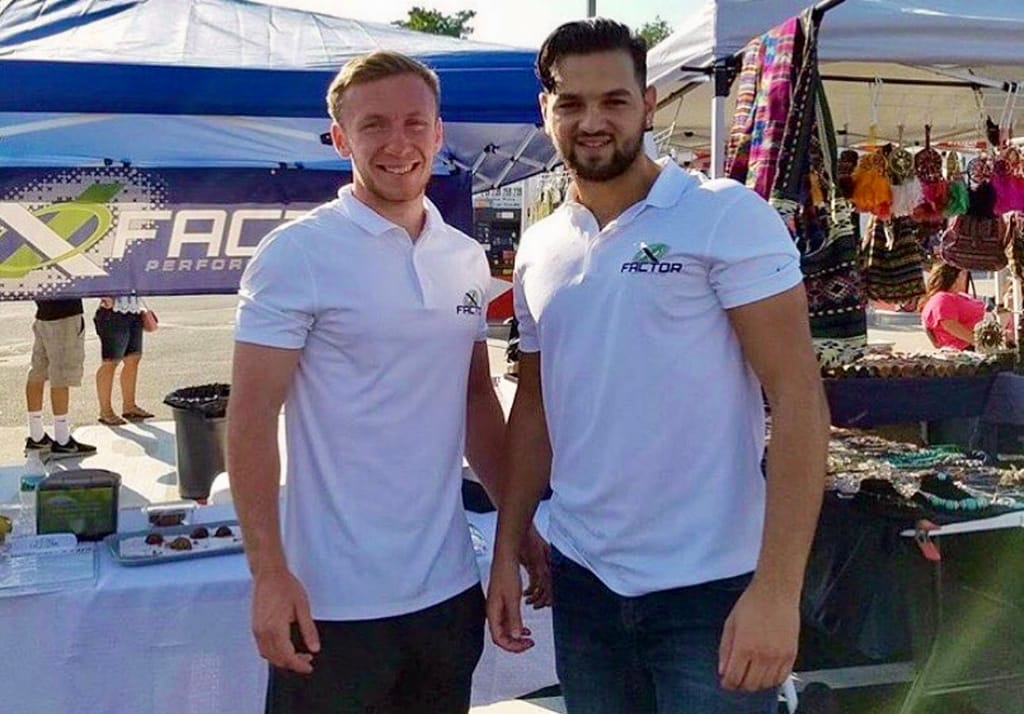
Ciaburri and Riss grew up in Holbrook and Ronkonkoma, bonded through sports, both went to college upstate (for a time), and worked out together back home.
Even then, they were already talking about entrepreneurship.
“Any time we came home from school, we were talking about something we could start,” Riss said.
But the seed for Redefine Meals was planted years earlier, when they were both 16.
Westchester Update:
Ciaburri, who studied nutrition and dietetics and always had an affinity for preparing meals at home, remembers a conversation at World Gym in Ronkonkoma, where they saw a poster for prepared meals delivered.
“I remember looking at Matt and saying, ‘We could do that,’” Ciaburri said.
The idea germinated. In 2016, after their sophomore year of college, they decided to go all in. Riss transferred home to Stony Brook University, and the same day, they incorporated what would become Redefine Meals.
They started small: vending at sports tournaments, offering healthier alternatives to the typical fried food stands.
Their startup capital totaled $5,000 from savings, which included money Riss received from his grandmother as a forward wedding gift, he said.
A grassroots beginning

Early on, they caught the attention of Stony Brook University’s athletic department, which was building a new fueling station for student-athletes. The pair developed three products using whole ingredients made from scratch: protein-infused cookies, cereal, and an energy muffin.
“Those were basically the three products that birthed Redefine Meals,” Ciaburri said.
“It gave us credibility having Stony Brook University behind us,” Riss said. “But financially, it wasn’t the solution.”
They pivoted again, renting a dated Knights of Columbus kitchen in Ronkonkoma — a 1950s-era space Ciaburri jokes was so old that when they lit the stove, well, “let’s just say we didn’t have eyebrows for two and a half years.”
They also began preparing what the company describes as balanced, nutrient-dense meals in Ciaburri’s home, delivering to friends, family and neighbors.
Their biggest early day? About 80 meals.
By May 2017, that jumped to 600 meals on their busiest day as they began private-labeling meals for nutrition shops across Long Island and into Westchester.
But they kept pushing their own product online. They built a basic Shopify site, set up tables at gyms, relied on word of mouth, and posted their first Instagram content.
Everything was bootstrapped.
“We never had an advisor or an investor,” Riss said. “We’re completely self-funded to this day.”
The leap to retail
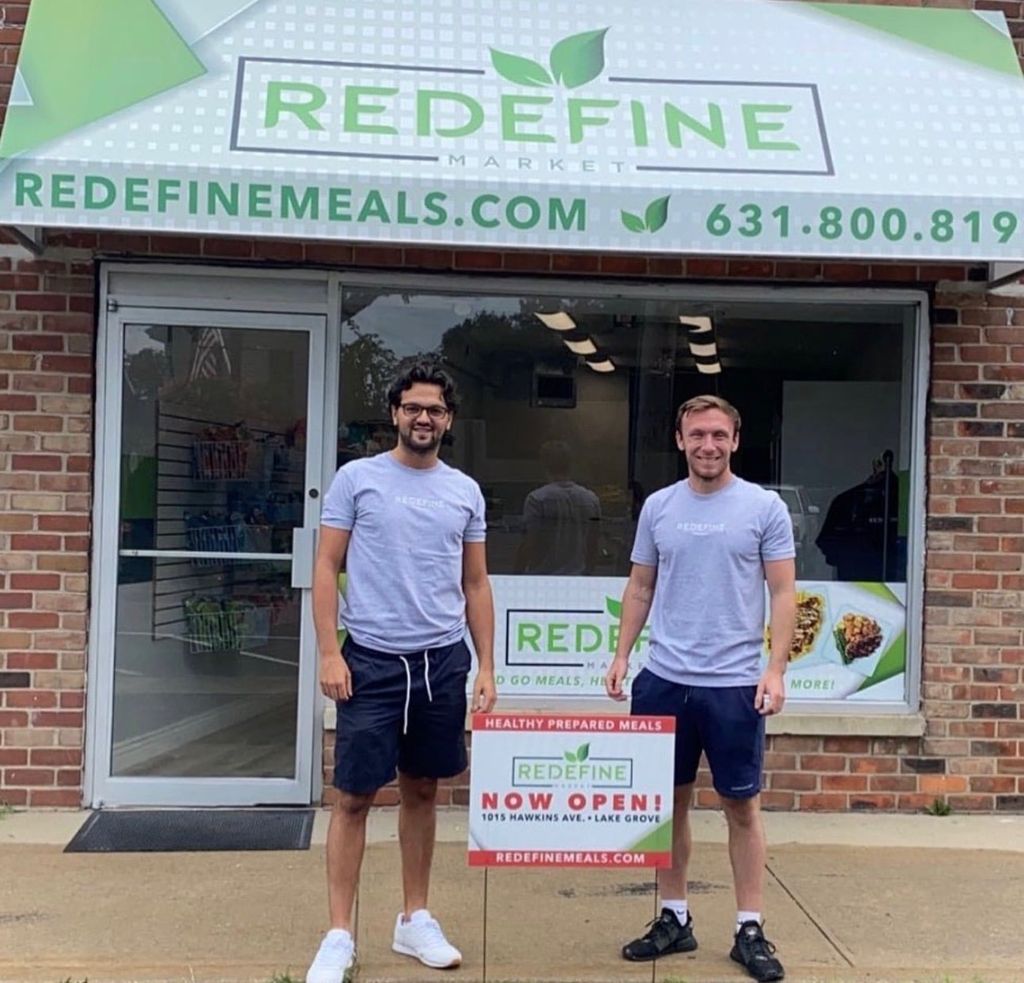
In late 2019, they made a defining decision: stop private labeling altogether and rebrand as Redefine Meals, focusing solely on their own product, their own ingredients, and their own stores.
Their first brick-and-mortar location opened in Lake Grove in August 2020 — chosen in part because it was affordable and close to home.
“I wouldn’t say the first store was a resounding success,” Riss admitted. “We were splitting shifts.”
Family filled the gaps. Ciaburri’s dad washed dishes. His aunt labeled containers. Friends showed up whenever help was needed.
Still, it worked well enough to keep going.
They opened their second store in Syosset later that year, followed by Commack and Bellmore in March 2021 — locations they largely built themselves, handling everything from flooring to painting.
By then, something had clicked.
“We knew we had a great product,” Ciaburri said. “We cared about the service. We knew it provided real value.”
They had faith.
Looking back, both credit their youth and naiveté for pushing them forward. But as they grew, they began to focus on areas where deliveries were strongest — and on getting their build-outs and operations dialed in.
Soon, it was off to the races.
A model built for scale
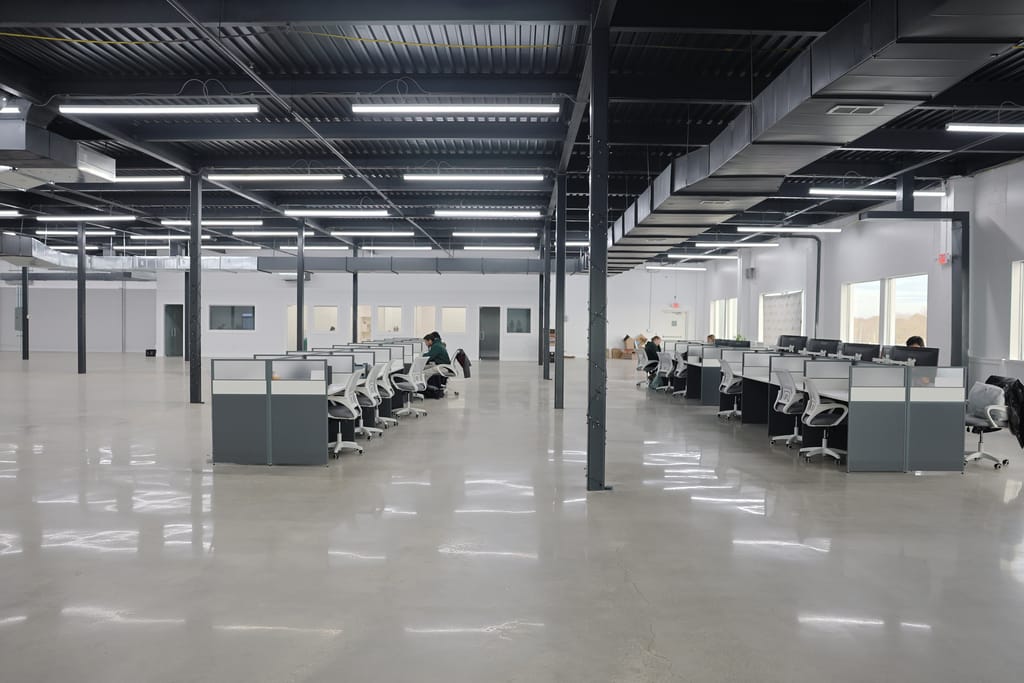
Today, Redefine Meals operates 24 locations across Nassau, Suffolk and Queens, including Astoria and Forest Hills, and has just signed a lease for its 25th store in Westchester County.
The company serves busy families, young adults, night-shift workers, seniors with dietary restrictions — basically anyone looking for a healthier, more affordable alternative to fast food.
Their business model is simple but strategic: centralize production, minimize retail overhead, and invest savings back into quality ingredients.
“Fast food is doubling, tripling in price every few years,” Ciaburri said. “We’re seeing that. And at the same time, we’re seeing food quality in this country get worse and worse. Larger brands are offering smaller portion sizes for more money. Meanwhile, we’re at the point where we can take grass-fed meat, marinate it in avocado oil — no seed oils — and make the cleanest food possible, fresh every day.”
“Today, our calories per dollar are cheaper than many major fast-food and fast-casual chains,” he added.
And while a McDonald’s, for instance, needs 3,500 square feet, 15 to 18 employees, large parking lots, and drive-thru infrastructure and technology (not to mention utility costs) to operate at a profit, a Redefine Meals location needs only about 1,000 square feet.
“Four walls, some merchandise, refrigerators and one employee per shift,” Ciaburri said. “So we’re looking at all that and saying, if we can make a good enough product and keep the price affordable, how could we not succeed? That has been the mindset.”
Taking over Entenmann’s
But rapid growth created a bottleneck: production.
“At our current facilities, we simply won’t be able to meet demand by March,” Ciaburri said.
So they looked big.
The pair set their sights on the former Entenmann’s Bakery campus, a landmark facility that once powered one of Long Island’s — and the country’s — most recognized food brands.
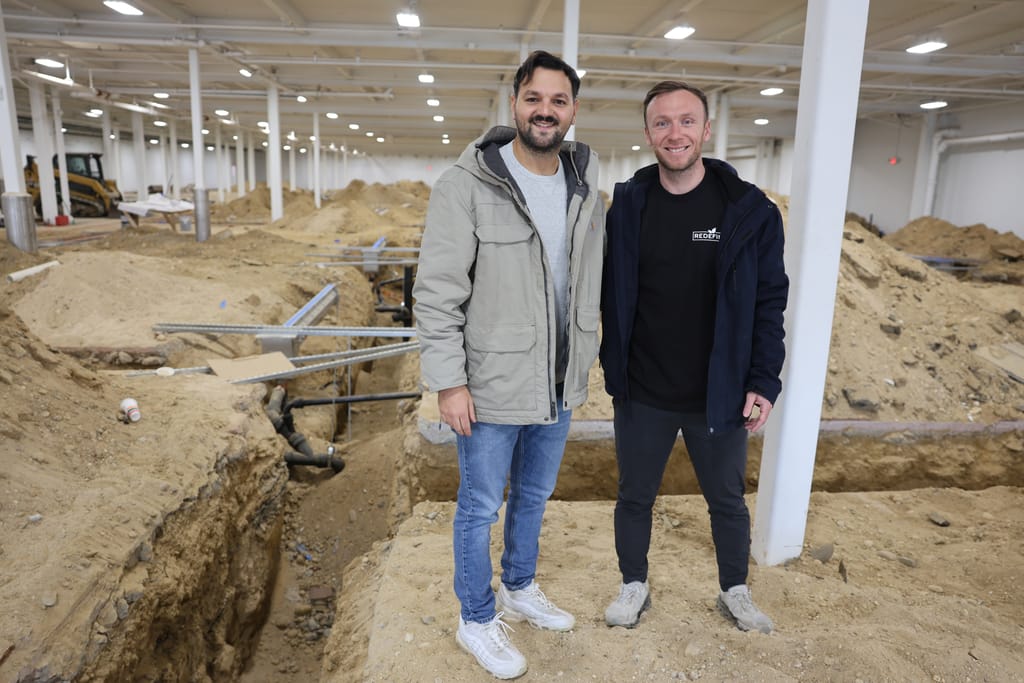
“We’ve been thinking about this project for four or five years,” Ciaburri said. “We didn’t have the resources or a large enough clientele base to get there. So we created demand by opening more locations, knowing that at some point we would be able to afford a building like this.”
So they sold and sold, and saved and saved.
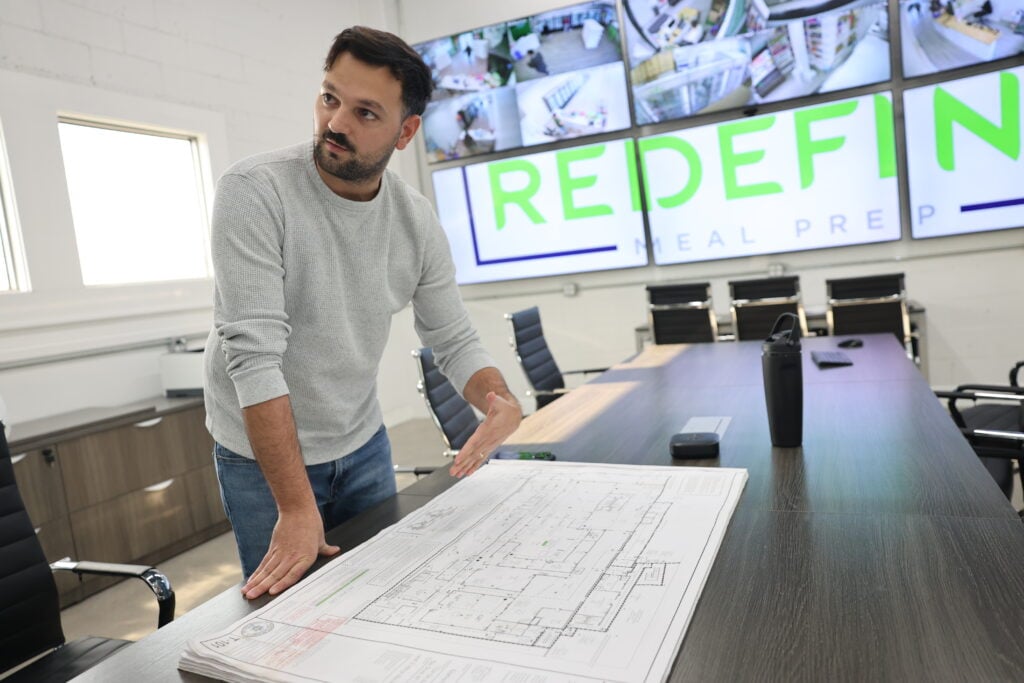
Work began last year transforming the space into a modern, high-volume food manufacturing operation.
“When you think of Entenmann’s and this building, it’s an iconic Long Island brand, and we kind of see Redefine in that same light,” Riss said. “We plan to bring it back to its heyday in terms of modern, high-level manufacturing that we’re going to be doing right here.”
There are also plans for a Redefine Meals factory outlet on campus, similar to what Entenmann’s once offered.
“It’s like revitalizing something that was once amazing,” Ciaburri said. “Back then, they were making pastries. Now we’re modernizing it. We’re selling health food.”
Once the first phase of construction is completed this year, the facility will allow Redefine Meals to scale from its current capacity of about 130,000 meals per week to 130,000 meals per day.
“This is the culmination of nine years of Redefine, all in one factory,” Riss said.
True to form, the founders are overseeing the build-out themselves — licensed general contractors who also build their own stores.
“We’ve centralized production, and now we’ve centralized construction,” Ciaburri said. “We’ve cut the cost of building a store in half. The goal isn’t to line our pockets — it’s to give the consumer a better deal.”
What comes next
The North Bay Shore facility positions Redefine Meals for aggressive growth, without having to move again. (Currently, the business operates a kitchen in Ronkonkoma and a building for prepping and packaging in Bohemia.)
Ciaburri and Riss say they ultimately envision hundreds of locations across the Northeast, with long-term ambitions of becoming a national brand — without ever compromising on ingredients or service.
They also believe they’re helping address a challenge that has long existed in the United States: making healthy food fast and affordable.
“We’ve industrialized healthy food and made it accessible,” Ciaburri said. “Before Redefine, there wasn’t an affordable, convenient healthy option for a lot of people. Now there is.”
And fittingly, that next chapter will unfold inside the walls of a Long Island institution.
The idea is to make Redefine’s Chinese Chicken & Broccoli or Penne alla Vodka with Grilled Chicken as beloved as Entenmann’s Crumb Cake or Original Recipe Chocolate Chip Cookies.
Just better for you.
“From the beginning, we’ve always felt this way: If we don’t love it and we wouldn’t eat it, there’s no world where we would ever sell it,” Ciaburri said. “If I’m eating clean ingredients, that’s what I’m going to offer.”
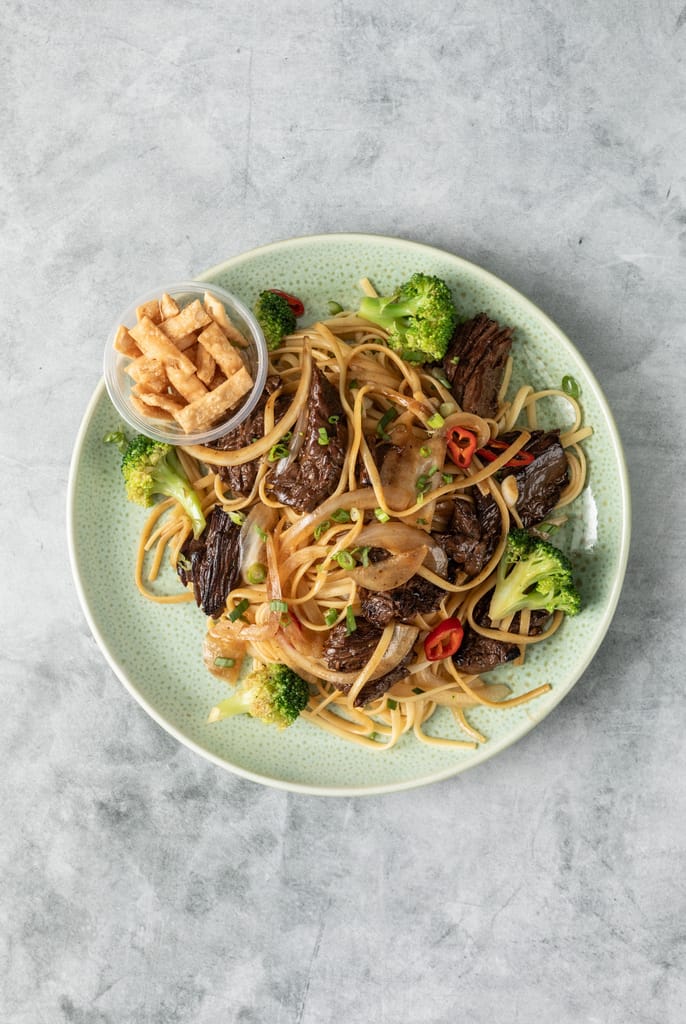
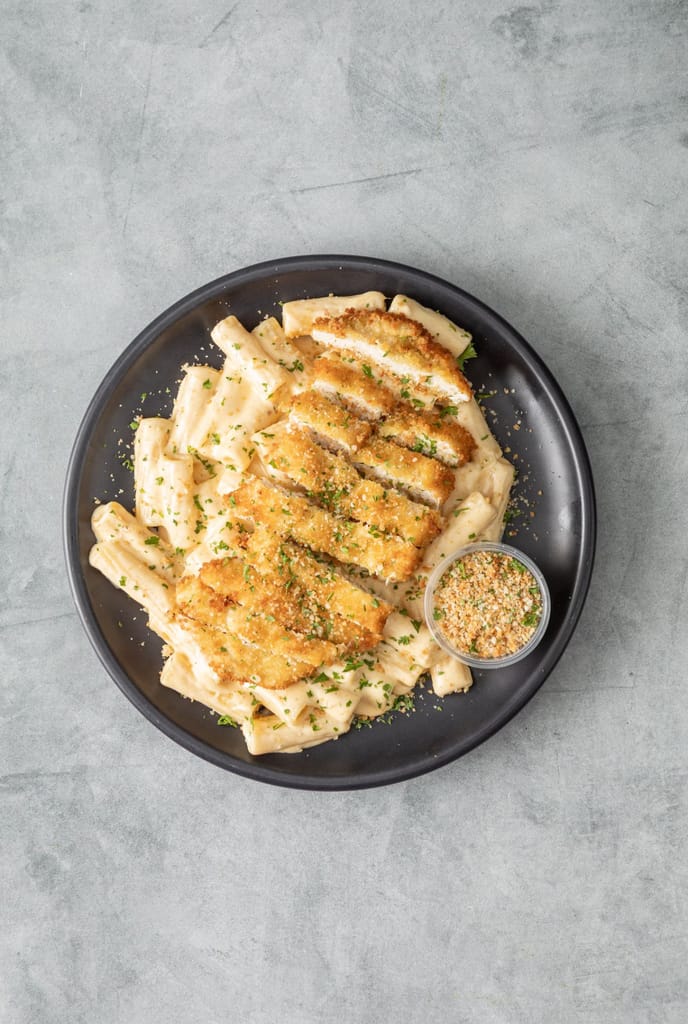
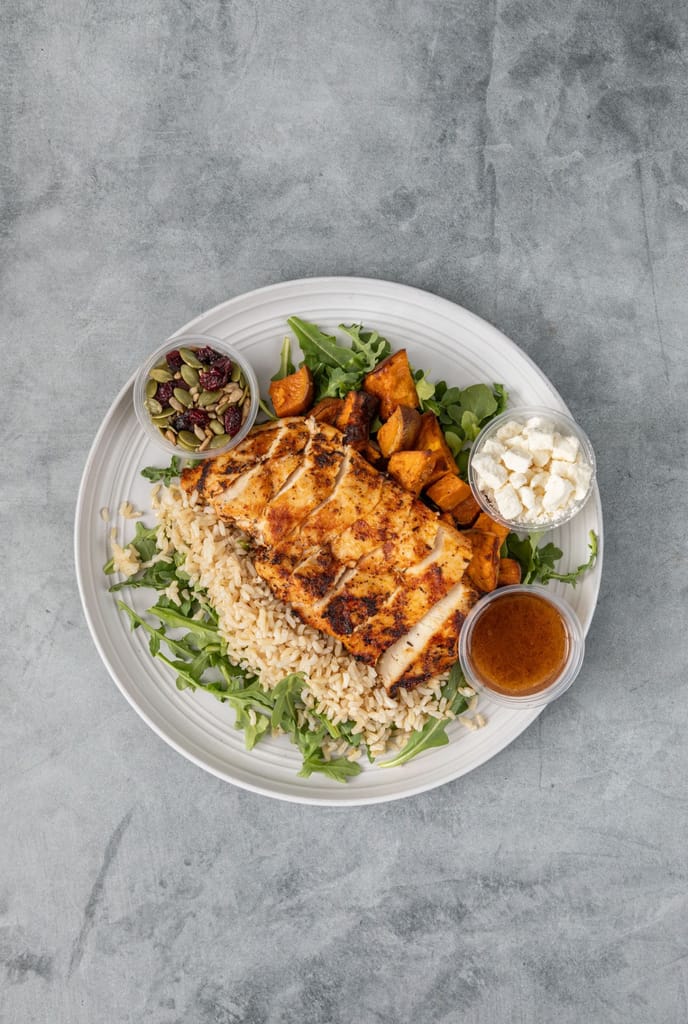
Pictured: Beef Lo Mein, Homestyle Mac and Cheese with Baked Chicken Cutlet, and The Redefine Power Bowl. Click here for the full menu. (courtesy photos)
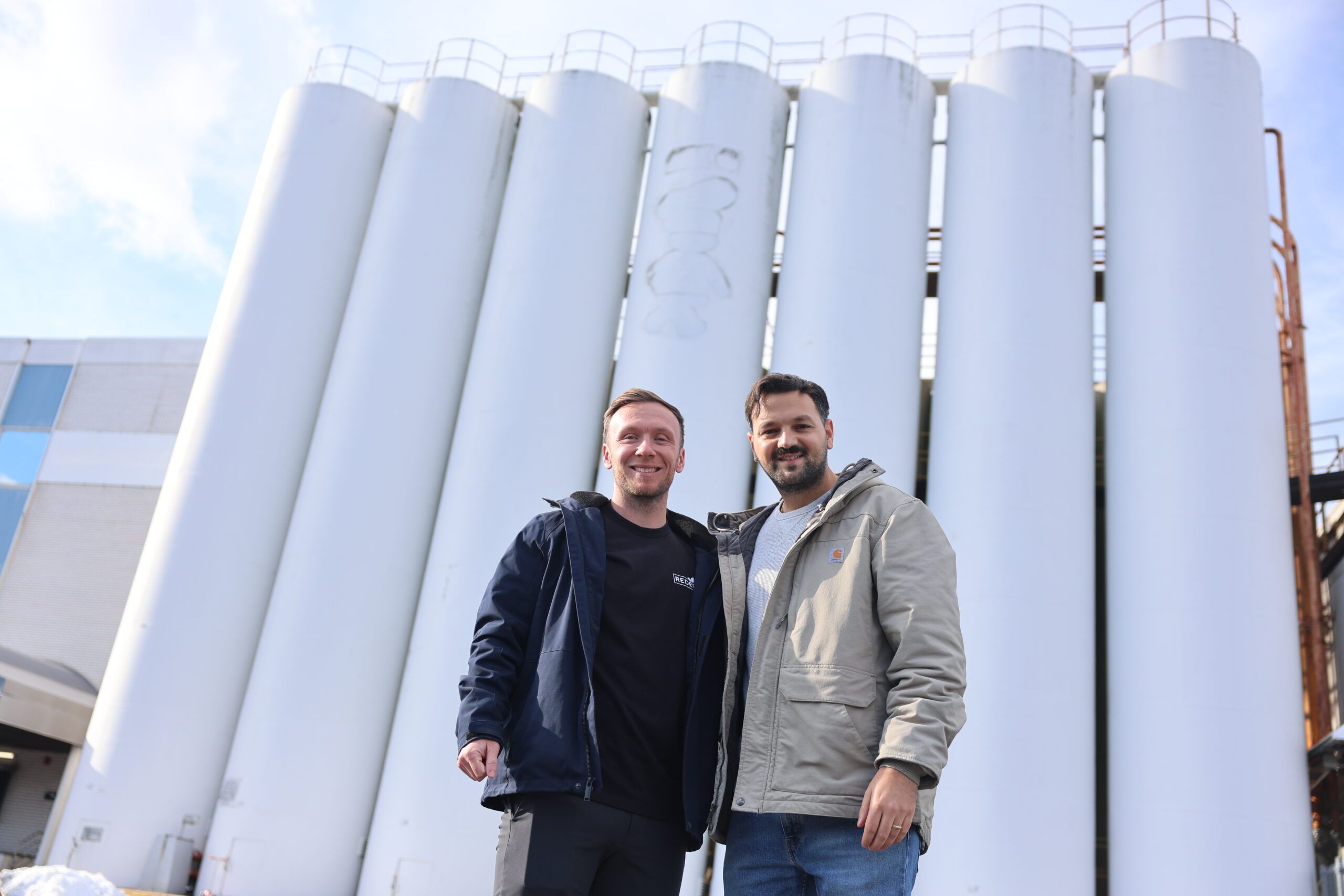
Top: Matthew Riss and Mark Ciaburri had eyed the former Entenmann’s Bakery campus on 5th Avenue in North Bay Shore for some four or five years, just waiting to be ready. (Credit: GLI/Nick Esposito)