

Greater Long Island coverage is funded in part by Toresco & Simonelli, a boutique injury and family law firm in West Islip. They fight for their clients. Click here to get in touch.
By Carole Trottere
Nassau County lawmakers have approved new legislation banning the sale and distribution of kratom, an unregulated herbal substance that officials say poses significant health risks, particularly to young people.
Nassau’s bipartisan measure, passed earlier this month, would remove kratom products from store shelves throughout the county and impose penalties on businesses that continue to sell it. The proposed measure now awaits the signature of Nassau County Executive Bruce Blakeman.
What is kratom?
Kratom, derived from a Southeast Asian plant, is often marketed as a natural supplement for pain relief, anxiety, or to increase energy.
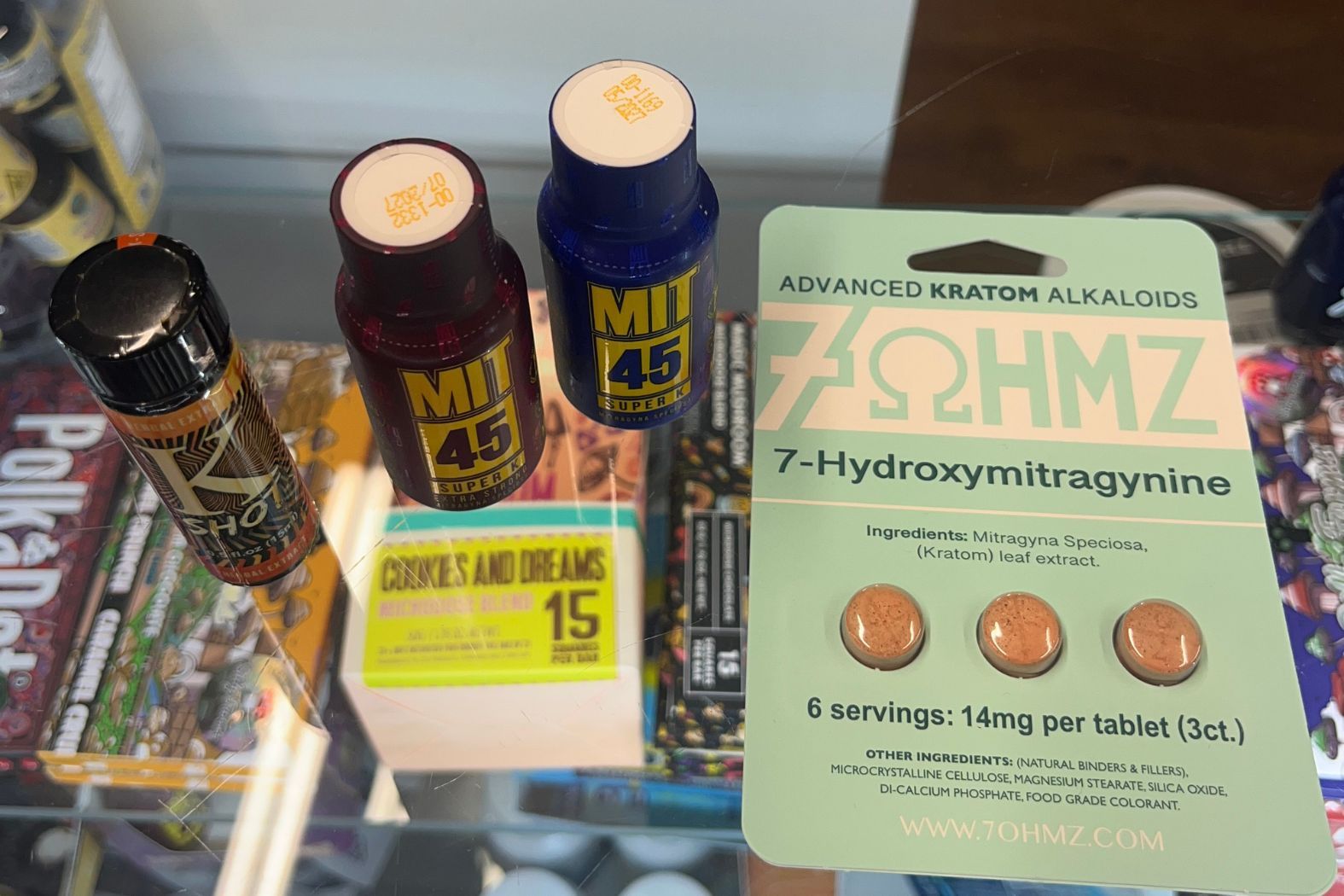
However, health officials warn that in higher doses it can produce opioid-like effects and may lead to dependence, seizures, liver toxicity and substance use disorder. Products often appear as capsules, powders, teas or small bottled drinks, and may be labeled as herbal supplements or wellness products.
Kratom has never been approved for medical use by the U.S. Food and Drug Administration.
Why the ban?
Lawmakers said the ban was necessary because kratom products are too often easily accessible and poorly regulated, with some being sold in gas stations, smoke shops and convenience stores.
Recent New York state laws already prohibit the sale of kratom to anyone under age 21 and require warning labels on products, but Nassau’s kratom bill calls for a ban of retail sales altogether.
Suffolk eyes similar legislation
In Suffolk, Legislator James F. Mazzarella is sponsoring legislation similar to that passed in Nassau.
“There are increasing reports of serious side effects from kratom, including addiction and death,” he said. “That in and of itself should be enough to create pause, yet companies are boasting descriptions such as, ‘powerful,’ ‘most potent,’ and ‘long lasting,’ only to draw more customers.
“The U.S. Food and Drug Administration has warned people not to use kratom. The DEA considers it a drug of concern,” he continued. “With little or no regulation and very limited information on its packaging, I ask, ‘Is this a substance we want readily available to our residents?'”
Suffolk District Attorney Ray Tierney voiced support for an outright ban.
“A complete ban on the sale of kratom, in all forms and to any purchaser, is common sense legislation that will help protect the public at large, and most importantly our youth,” Tierney said. “Law enforcement faces challenges when our lawmakers set arbitrary boundaries to whom dangerous substances can be sold, often unable to overcome straw-purchases or under-the-counter sales to minors in busy gas stations.”
“My office will seek to enforce the outright ban to ensure that profits are not earned by any seller to any user for any purpose,” Tierney added.
‘The grip of dependence’
Substance abuse prevention advocates say many kratom users erroneously believe the substance is risk-free.
“The rise in use and the misuse of kratom is another dimension of the substance abuse epidemic, as untreated individuals seek a new class of synthetic comforts for emotional pain and discomfort,” said Steve Chassman, vice president of organizational development at Wellbridge Addiction Treatment and Research.
“All mind- and mood-altering substances carry the potential for abuse and dependence. I think there are many individuals who are seeking emotional relief in alternate or ‘organic’ products. Regrettably, the potential for kratom’s psychological and physical dependence is under-reported.
“Unfortunately, the public has been misled in the false belief that kratom is harmless in its use, until the grip of dependence befalls the user, both psychologically and physically,” Chassman continued. “FDA-approved medicines for psychological issues are disseminated from qualified physicians, not gas stations.”
Chassman stressed that healthy coping strategies are better learned and acquired with the assistance of licensed behavioral health professionals or through fellowships geared towards wellness.
Warning signs
Because kratom can act as both a stimulant and a depressant depending on the dose, symptoms may vary. Health experts advise parents to seek medical or counseling support if they suspect the following:
- Unusual changes in energy levels (periods of hyperactivity or unusual drowsiness)
- Mood swings, irritability, anxiety, or depression
- Nausea, vomiting, constipation, or loss of appetite
- Red or glassy eyes, constricted pupils, or frequent itching
- Excessive sweating or dry mouth
- Trouble sleeping or changes in sleep patterns
- Declining school performance or loss of interest in usual activities
- Secretive behavior or withdrawing from family and friends
- Unexplained packages, powders, capsules, or liquids labeled as “kratom,” “mitragyna,” or “botanical supplements”
- Possession of paraphernalia such as small scales, empty capsules, or drink mixes used to mask the bitter taste
- Financial changes, such as missing money or frequent small purchases online or at smoke/vape shops
- Signs of dependence, such as needing increasing amounts, complaints of withdrawal symptoms (headaches, muscle aches, or irritability) when not using
Carole Trottere is an advocate for addressing addiction and the fentanyl/opioid crisis. Her son Alex died in 2018 of fentanyl poisoning, changing the trajectory of her life. She has been published in Newsday, Psychology Today and other regional publications. She is currently the media director for The Jazz Loft in Stony Brook. Carole lives in Old Field.
Top: Carole Trottere photo

Your Long Island news, delivered.
Subscribe to the GLI Newsletter — its free