
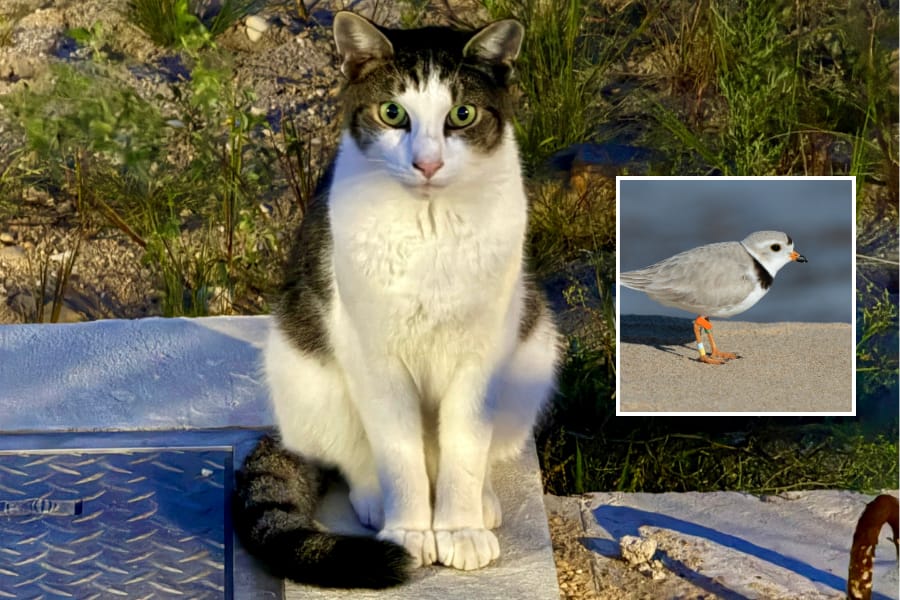
Feral cats are flourishing on Fire Island — and that surge is putting one of the region’s most fragile bird species at risk.
Since 2015, researchers led by wildlife biologist Christy Wails have documented what she describes as an “apparent expansion” of feral cats on the barrier island.
The rise comes at a time when the natural predator in the ecosystem — the red fox — was nearly wiped out by disease.
And it’s happening on a stretch of coastline that piping plovers, a threatened shorebird, rely on to survive.
How it started
The research began years ago, after Hurricane Sandy tore through Long Island and reshaped entire barrier island systems.
In the aftermath, the U.S. Army Corps of Engineers sought to stabilize the coastline to prevent future destruction.
Their plans triggered new scientific questions:
Would altering beaches to protect human communities harm the piping plover, a species protected under the Endangered Species Act?
“The potential disturbance of the modification of the landscape to protect human communities could have implications for the nesting shorebirds that are on those barrier island beaches,” Wails said.
Working with the U.S. Fish and Wildlife Service, the National Park Service and local partners, researchers began restoring plover habitat and monitoring how the birds responded to the changing environment.
“So our team was responsible for participating in the research and monitoring to understand what kind of implications habitat change has for piping plovers,” Wails said.
The discovery
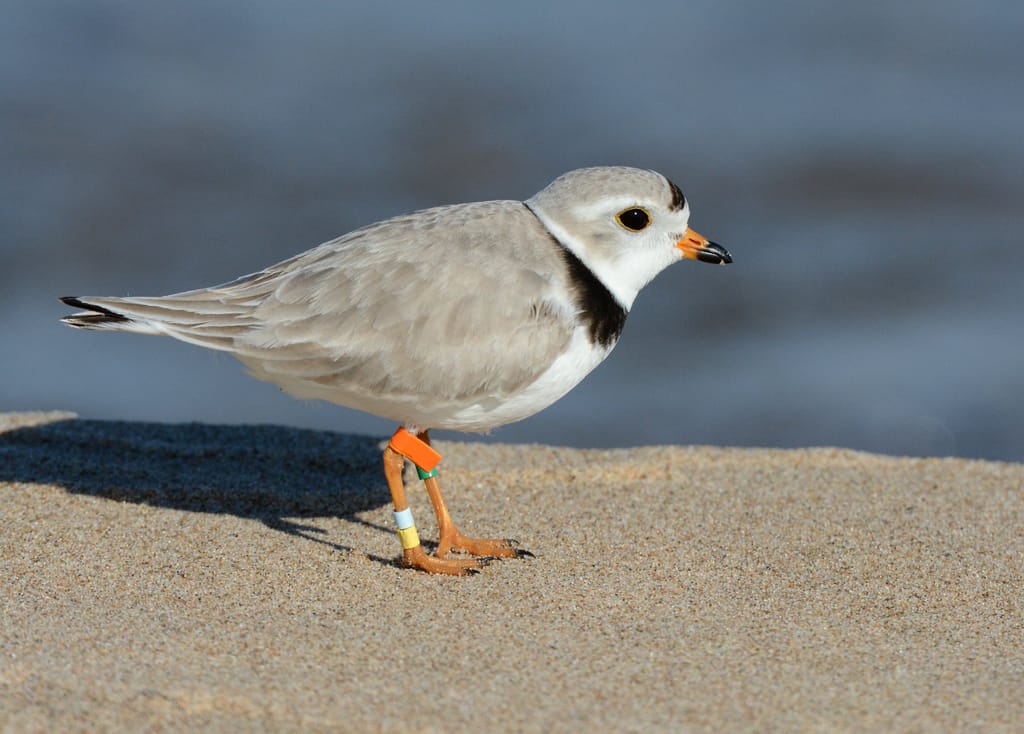
To understand how plover populations shifted over time, the research team captured birds and fitted each with a unique combination of colored bands — “similar to an ankle bracelet,” Wails said — allowing them to identify individual birds from a distance.
“We can see who’s moving where, what they’re up to, and understand the population change through time,” she said.
Researchers observed from far away using high-powered spotting scopes to avoid disturbing the birds. They also deployed 100 trail-camera stations, each with two cameras aimed down the same path.
“The idea being that an animal is going to walk through a trail and we’re going to get a good image of the individual from both sides,” Wails said.
Because foxes are the natural predator of plovers, a graduate student on the team tracked red foxes during the nesting season.
The animals were humanely captured, fitted with temporary GPS collars and monitored to learn how habitat restoration affected their movements and diet.
But during the work, something unexpected happened.
Natural predators decline
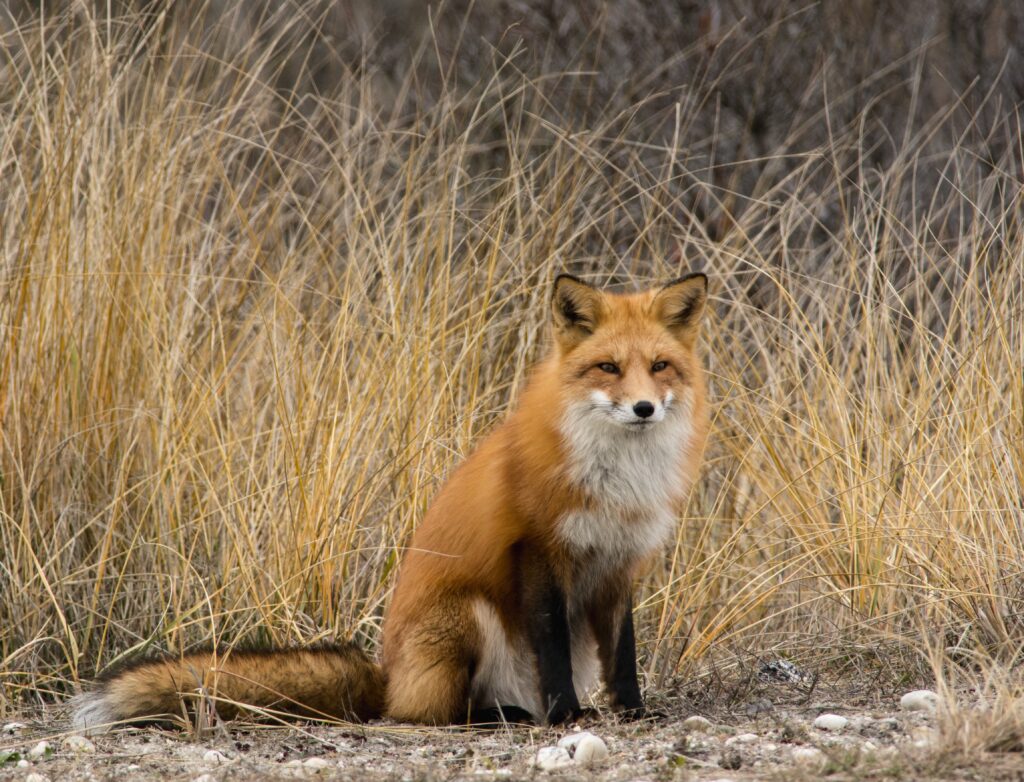
Around 2015, researchers noticed red foxes suffering from sarcoptic mange — a parasitic skin disease that Wails described as devastating.
“A parasite digs into the skin, causing really intense itching, and usually the individual that has that infection will experience secondary infections that create lesions, which also gets infected,” Wails said.
The outbreak decimated the fox population. Some years, researchers saw only one or two foxes. Other years, none at all.
At first, Wails said, the disappearance of the plovers’ main predator seemed like it might help the struggling bird.
“But what we saw was that in the absence of red foxes, we saw an apparent expansion of the feral cat population,” she said.
A new threat
Once the fox population crashed, researchers began seeing more and more cats on the landscape. Exactly how they got there remains unclear, Wails said, but several theories exist.
Fire Island includes many private homes — and some residents keep outdoor cats that may not be spayed or neutered.
There’s also geography. Two bridges link Fire Island to Long Island, and Wails said foxes have been documented crossing them. Cats, she noted, likely could too. And in colder winters, parts of the Great South Bay freeze, creating yet another pathway.
Trail cameras recorded trap-neuter-return (TNR) colonies — well-intentioned efforts to manage cat populations humanely. But Wails said they don’t always work as hoped.
“So the idea with the TNR colonies is that folks will provide shelter, food, and about once a year, they will attempt to trap the cats to neuter them so that they can’t reproduce,” she said.
The problem: even well-fed cats remain hunters.
Wails said the animals are “efficacious predators” with a “high prey drive.” And that means they keep hunting — including endangered birds.
“And what that means is we can lose birds,” she said.
The impacts
Research from around the world shows that cats can severely reduce native species on islands, and even drive extinctions. They also pose risks to humans.
“Cats can spread toxoplasmosis and there are other diseases that can be spread as well,” Wails said.
Toxoplasmosis, caused by a parasite, can create flu-like symptoms and eye infections that result in pain, vision problems and floaters.
For piping plovers already battling shrinking habitat and harsh weather, cats are one more hurdle.
“What I found in my work is that for every seven to eight additional cats on the landscape, the ability of a piping plover chick to survive five days goes down 5 percent,” Wails said. “And that may not sound like a lot, but they’re dealing with other challenges too.”
What can be done
Wails said the ideal solution is humane removal.
“In a perfect world, we would love to humanely remove cats by relocating them to a facility where they can live out their lives comfortably, safely indoors,” she said.
But timing is everything. Removing cats only works if foxes are returning at the same time — otherwise, Wails said, another predator will fill the void.
“Foxes are the predator that belongs in the system,” she said. “And then just letting the system kind of recover is the perfect goal.”
There are early signs that fox populations are rebounding on Fire Island, which is good news for the natural ecosystem — but dangerous for the cats now sharing space with a restored predator.
How to help
One of the simplest steps, Wails said, is also one of the most important: stop feeding wildlife, including cats.
Feeding can artificially inflate populations and cause animals to rely heavily on humans. When food runs out, cats turn to whatever is available — often nesting birds.
Because Fire Island includes so many communities, each with its own policies and practices, Wails said collaboration is key.
“We like Fire Island beach, we enjoy the beaches, we enjoy the wildlife and this is about working together to protect that resource and understanding the damage that we have done as humans and understanding what our actions can do,” she said.
“I think there’s a lot of opportunity to right the wrong.”
Top: A feral cat poses for a photo on a South Shore beach. (Credit: Nick Esposito) Inset: Piping plover