

More than a decade after it was first detected on eastern Long Island, the Southern Pine Beetle continues to eat its way through the Central Pine Barrens and beyond — killing trees, weakening forests and creating dangerous fuel for wildfires.
The invasive insect was first spotted in Suffolk County in October 2014. Scientists and environmental advocates say the region is now dealing with the long-term consequences of an infestation that is no longer new, including heightened wildfire risks.
Those consequences became especially visible this past March, when beetle-killed pine stands helped accelerate the rapid spread of wildfires that tore through parts of Moriches, East Moriches and Westhampton Beach.
Greater Long Island covered the fires extensively as they unfolded. In the course of that reporting, the beetle emerged as a key factor in how quickly they spread.
Milder winters
The Southern Pine Beetle is native to the southeastern United States.
Historically, cold winter temperatures prevented it from surviving farther north. But as winters have grown milder, the insect has steadily expanded its range up the East Coast — and now thrives year-round on Long Island.
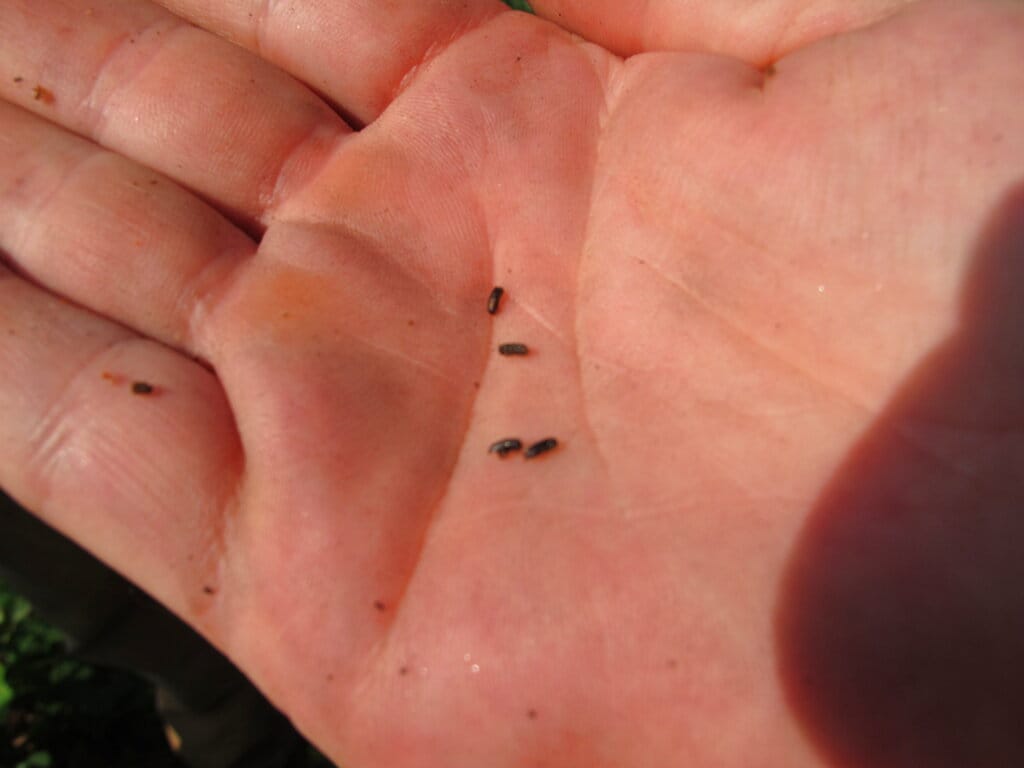
Roughly the size of a grain of rice, the red-brown beetle attacks pine trees en masse, overwhelming their natural defenses.
Since its arrival, it has killed trees in the Pine Barrens and across eastern Long Island.
How they kill

The beetle enters through small crevices in a tree’s bark, carving distinctive S-shaped tunnels just beneath the surface. In the process, it disrupts the flow of nutrients, typically killing the tree within two to four months.
“They bore into the trees and have a symbiosis with a native fungus species,” said Frank Piccininni, biologist and vice president of the Long Island Conservancy. “They create a habitat for the fungus, the fungus grows, and then they eat the fungus.”
Pine trees can fend off small attacks by producing resin, but large infestations overwhelm those defenses.
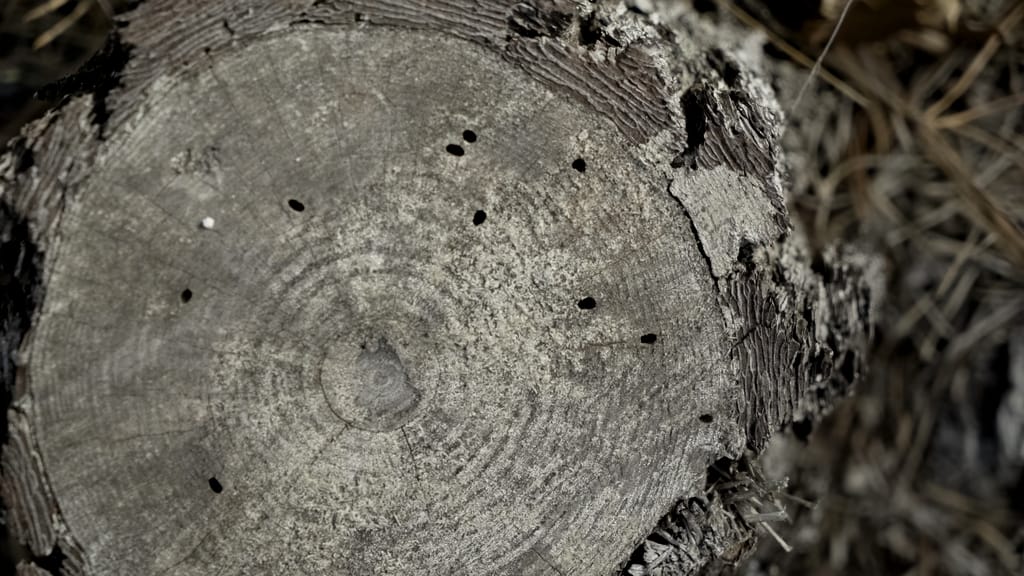
Signs of infestation include popcorn-shaped pitch tubes along the bark, tiny bore holes, winding tunnels beneath the bark, and recently dead trees marked by reddish-brown needles.
Already suscepitble

The Pine Barrens are dominated by “even-aged stands,” meaning most trees in a given area are roughly the same age. That uniformity creates intense competition for resources and weakens the forest as a whole.
“With these even-aged stands, when one of the trees gets hit, boom — the whole stand goes down from the pine beetle,” Piccininni said.
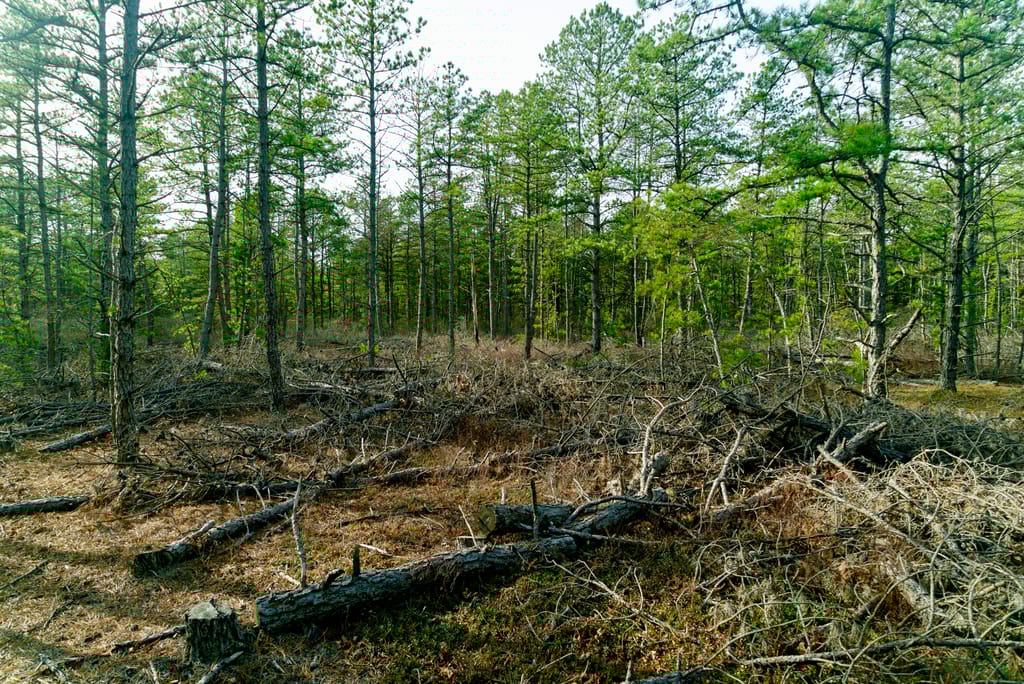
As these stands die, they leave behind large amounts of standing dead wood — highly combustible fuel that dramatically increases wildfire risk.
Climate changes

Piccininni said the pine beetle and Long Island’s recent wildfires are symptoms of the same underlying issue: climate changes.
“The beetles are here more frequently because it’s warmer and we’re getting more big, flashy storms followed by drought,” he said.
Dead, beetle-killed trees ignite faster than living ones. Piccininni likened the conditions they create to “little campfires,” where a single spark — from lightning, a cigarette butt, s’mores (blamed for starting the March fires) or storm damage — can ignite a fast-moving blaze.
State response
On a regional scale, experts say prescribed burns and forest thinning are critical to restoring healthier, more resilient ecosystems.
In an August announcement, Gov. Kathy Hochul unveiled a three-year, $2.2 million contract to combat the Southern Pine Beetle at Hither Hills and Napeague State Parks. The effort, which began in November, focuses on removing dead trees, reducing fuel loads, and restoring fire-adapted forest conditions.
“Strategic forest management of Long Island’s pine barren — including thinning, brush reduction, and prescribed burning — improves forest health, reduces fuel loads, manages for the impacts from southern pine beetle (SPB) risk, and restores the fire-adapted conditions these ecosystems depend on,” the announcement stated. “Dead trees will continue to be cut and piled, and later will either be chipped, removed, or burned under an approved burn plan, depending on site conditions.”
Fighting invasives
Beyond state-led forest management, conservationists stress that local action matters — particularly when it comes to invasive plant species that crowd out native plants and weaken ecosystem and forest health.
“Invasive species impair the microbial networks that native forest communities rely on,” said Devon Giordano, executive director of the Long Island Conservancy. “Growing a healthy ecosystem with native plants and biodiversity helps mitigate these kinds of infestations.”
The conservancy’s Dirty Dozen list identifies the 12 most harmful invasive plants on Long Island, including porcelain berry, bamboo, English ivy, Chinese wisteria, phragmites, Japanese knotweed, tree of heaven, mugwort, oriental bittersweet, Japanese barberry, multiflora rose shrub, and burning bush.
Though popular for its bright red fall color, burning bush spreads aggressively and can escape into nearby forests.
“I’m an environmentalist and I didn’t even know until less than a decade ago that half the plants on my property were terrible,” Giordano said.
“So the average Long Islander may not know as well, and we really want to make this information accessible.”
Education and restoration
The conservancy is also working with local municipalities to encourage more environmentally friendly codes that promote wildflowers and other native species. The organization partners with Spadefoot Design & Construction to restore native habitats across Long Island.
“We want to steward the next generation of environmental enthusiasts,” Giordano said. “So we’re working with schools and youth groups, and we’re getting them outside, getting their hands dirty — picking weeds, planting trees — and getting them excited about what they can do right in their backyard and public parks.”
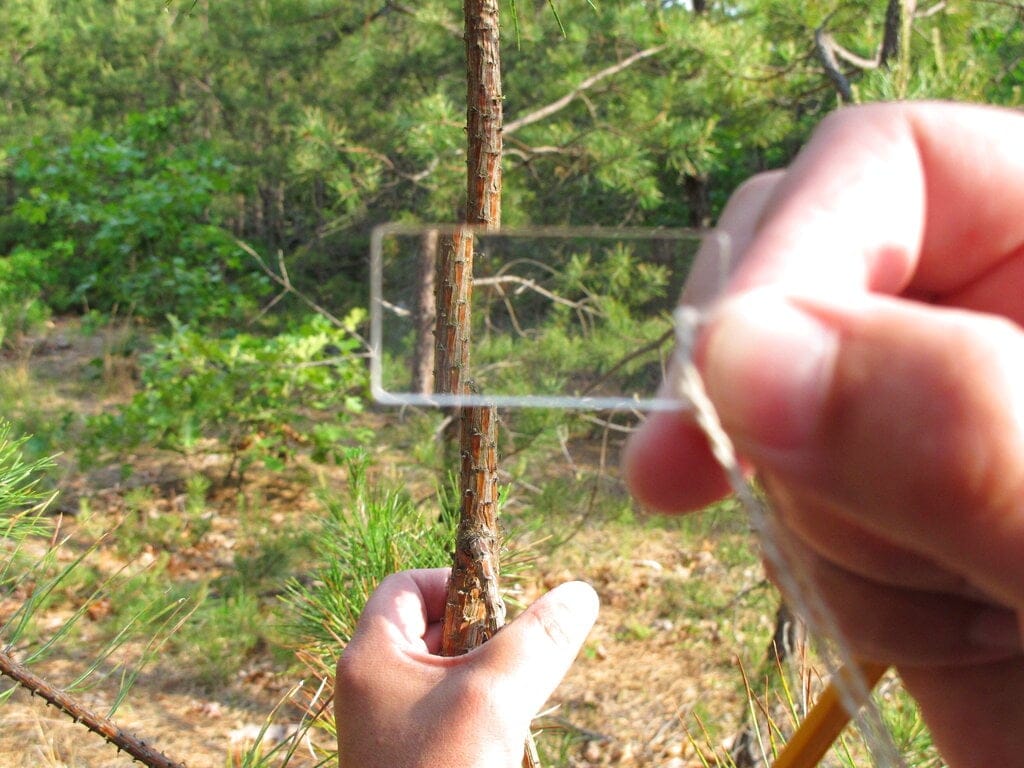
Top: In this photo taken Friday, June 12, 2015, in Rocky Point, a forester with the New York Department of Environmental Conservation uses a prism to measure a pine tree in the Rocky Point Natural Resources Management Area. (AP Photo/Frank Eltman)

Your Long Island news, delivered.
Subscribe to the GLI Newsletter — its free