

Greater Ronkonkoma coverage is funded in part by The Core at Station Yards, now leasing brand-new apartment homes in the heart of Ronkonkoma.
Once a summer jewel for generations, Long Island’s largest freshwater lake is getting a real shot at recovery.
It all comes in the form of $300,000 in new funding to hire a dedicated team of lakekeepers.
They will become the true stewards of Lake Ronkonkoma, is the hope.
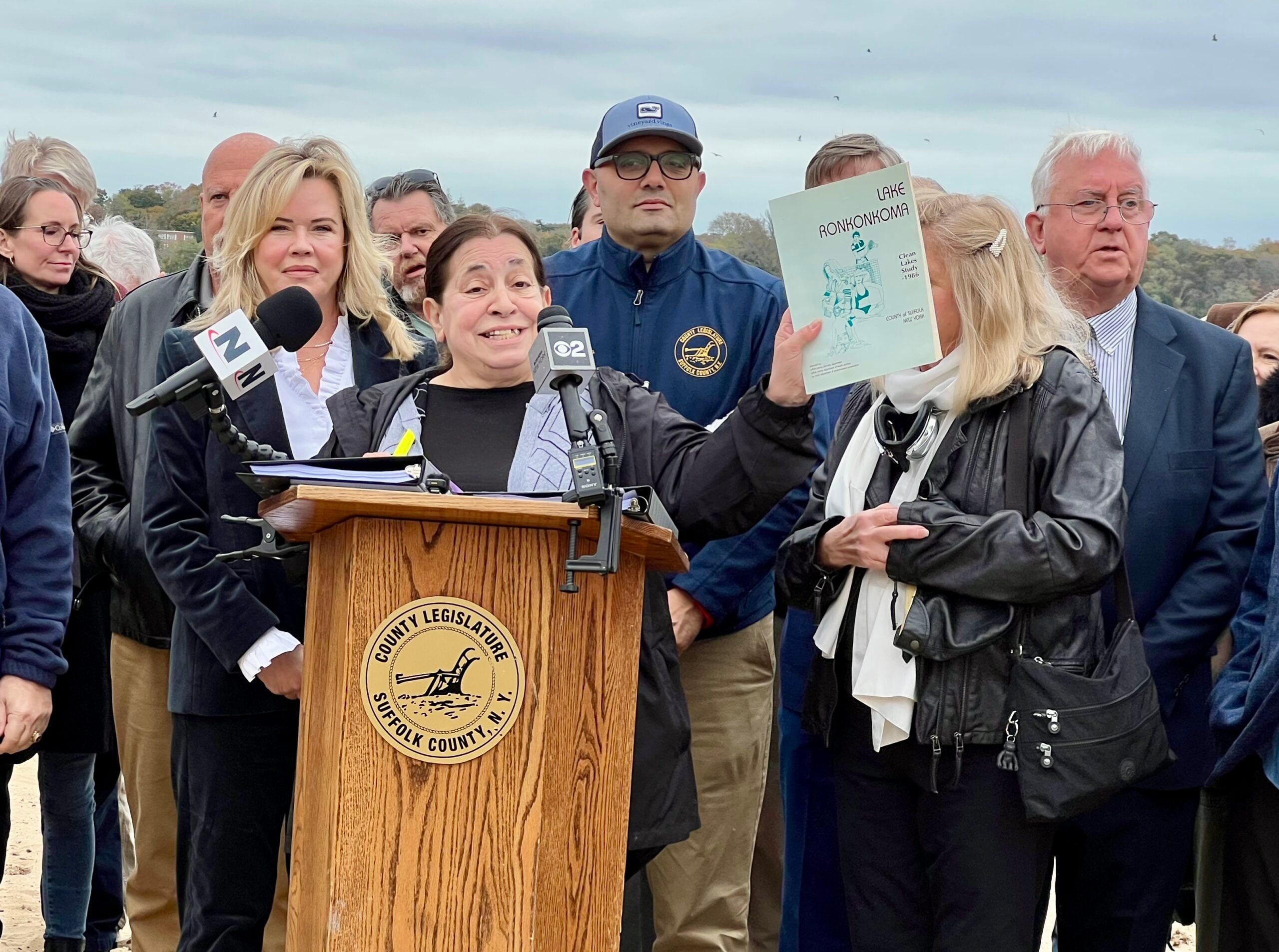
Suffolk County legislators Leslie Kennedy and Trish Bergin stood at the water’s edge Wednesday to make the big announcement, along with members of the Lake Ronkonkoma Advisory Board.
The money, years in the making, comes from the state Department of Environmental Conservation and will flow through the Long Island Regional Planning Council as part of the Long Island Nitrogen Action Plan.
The goal: to finally coordinate how the degraded lake is monitored, managed and restored to glory.
Prior coverage: The rise, fall, and uncertain future of Long Island’s largest lake
“I’ve been working on getting a lakekeeper for four and a half years,” Kennedy said. “I can’t tell you how thrilled I am that we finally did.”
Kennedy explained that the “lakekeeper” will actually be a team that works in coordination with Dr. Christopher Gobler of Stony Brook University, whose lab specializes in coastal ecosystems and algal bloom research.
The group will produce an annual “State of the Lake” report, track nitrogen and phosphorus levels, and identify stormwater and pollution projects that have local support.
Kennedy noted that the environmental damage to Lake Ronkonkoma has been building for more than a century, and that full restoration could take a decade or more. But she said the effort is already underway, with the lakekeepers beginning work immediately to combat stormwater runoff and other pollutants such as phosphorus.
“We have the technology necessary to clean this up,” Kennedy said. “It just takes persistence and it takes a neighborhood — and we’ve got our neighborhood.”
Rich Guardino, executive director of the Planning Council, said the lake’s environmental decline is largely tied to outdated septic systems and stormwater runoff that fuel harmful algae and close beaches each summer.
“So many of the people who are joining us here today have grown up swimming in the lake,” Bergin said. “They’ve watched their children enjoy it, and unfortunately, the water quality has diminished so significantly that there are days in the summertime where we have to shut down Lake Ronkonkoma to swimmers. And we don’t want that to happen anymore.”
For longtime residents, the effort marks a symbolic turning point.
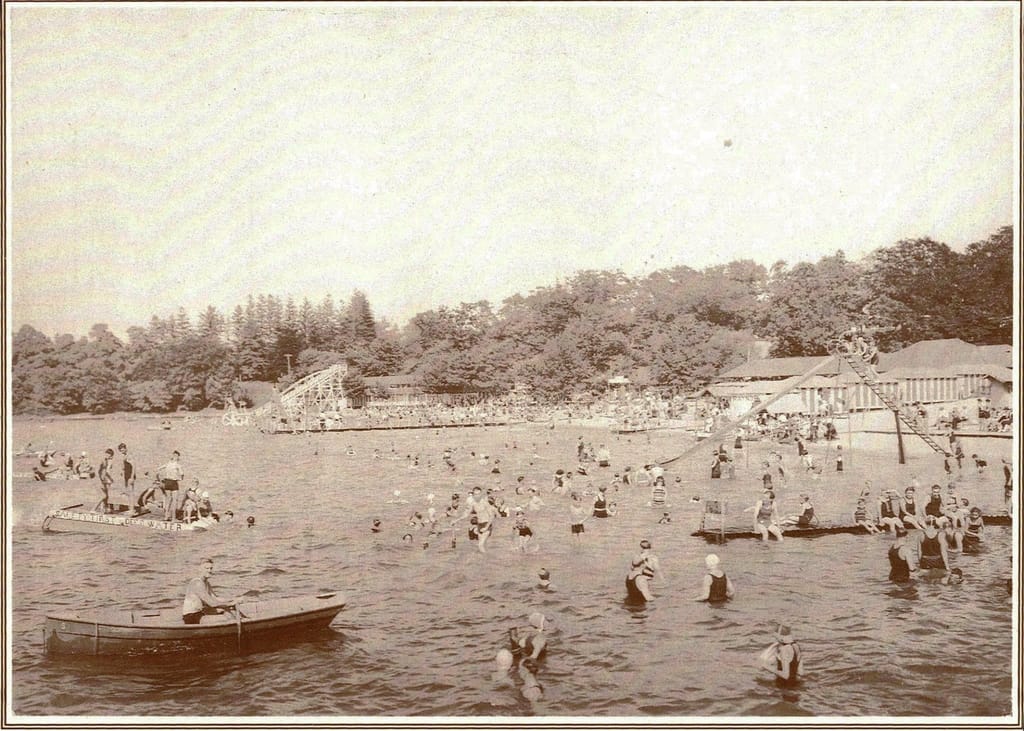
Decades ago, Lake Ronkonkoma was a destination — a place of pavilions, water slides, rowboats and family getaways that helped define Long Island’s identity.
Now, local leaders say, this cleanup could be the first step toward bringing that pride back.
And maybe, just maybe, a water slide or two.
“Together we are here today — state, regional, academic community, county partners, and our legislators,” said Sarah Lansdale, county planning commissioner. “We’re showing what collaboration can achieve — cleaner water, a healthier lake, and a stronger future for Suffolk County.”
The background
Top: Suffolk County Legislator Leslie Kennedy (speaking) holds up one of the many studies of Lake Ronkonkoma over the past few decades, which all indicate the lake has high levels of nitrogen and other pollutants. (Credit: Ben Fiebert)

Your Long Island news, delivered.
Subscribe to the GLI Newsletter — its free