

Greater Sayville coverage is funded in part by The Shed, a scratch kitchen serving brunch and dinner daily in West Sayville.
Anna Davis drives herself to the Bayport-Blue Point Public Library every Tuesday morning — at 100 years old. And she’s not there to browse books.
She’s there to move.
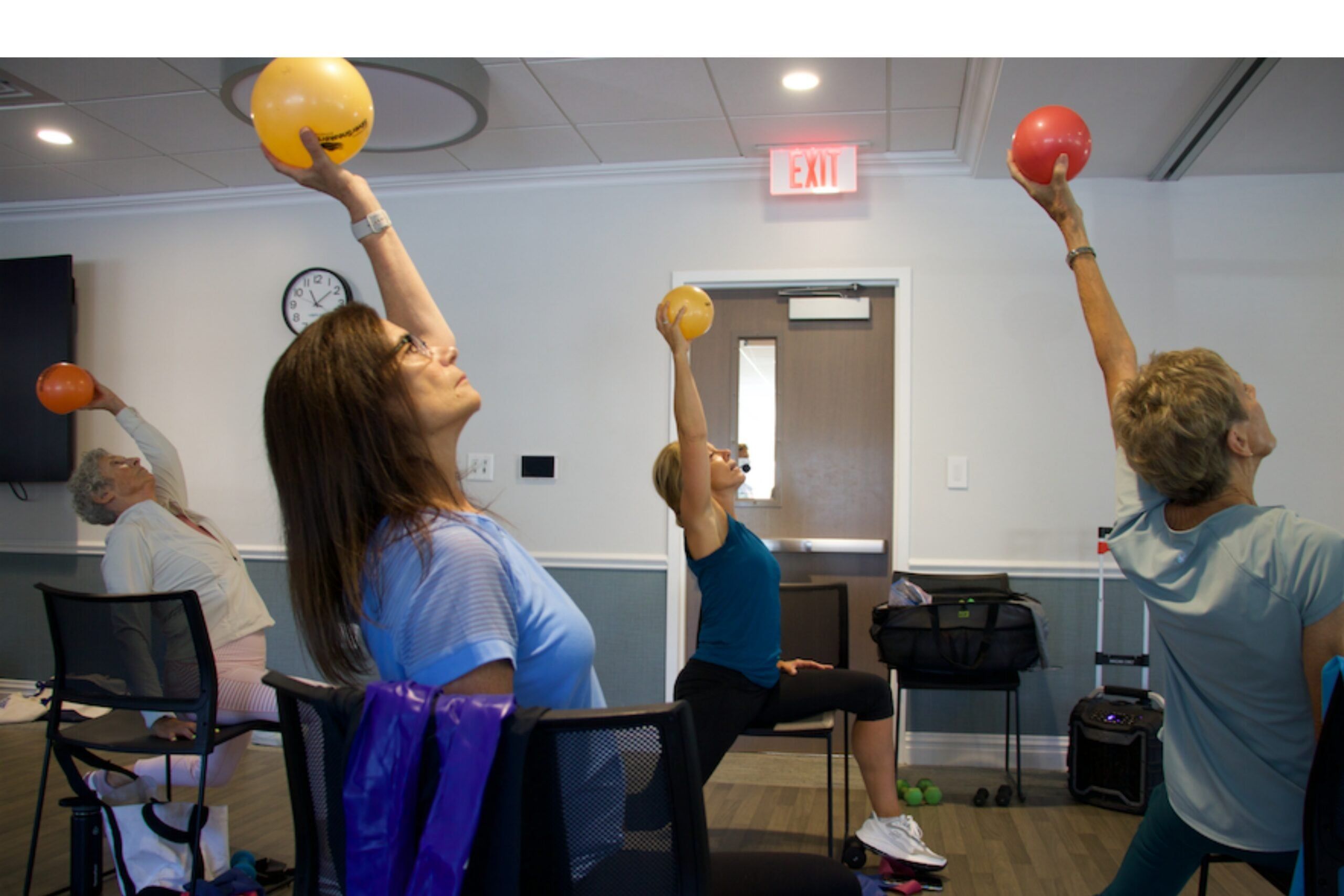
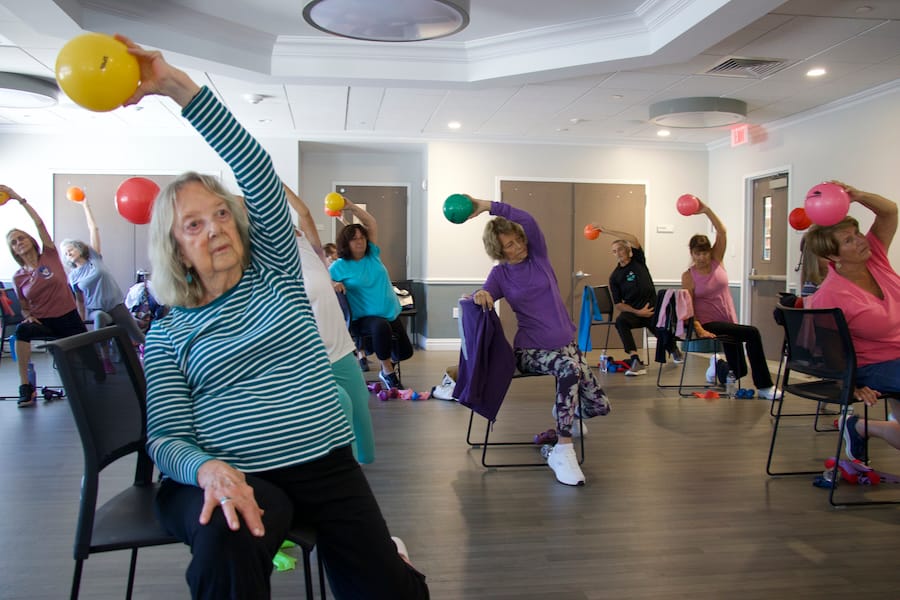
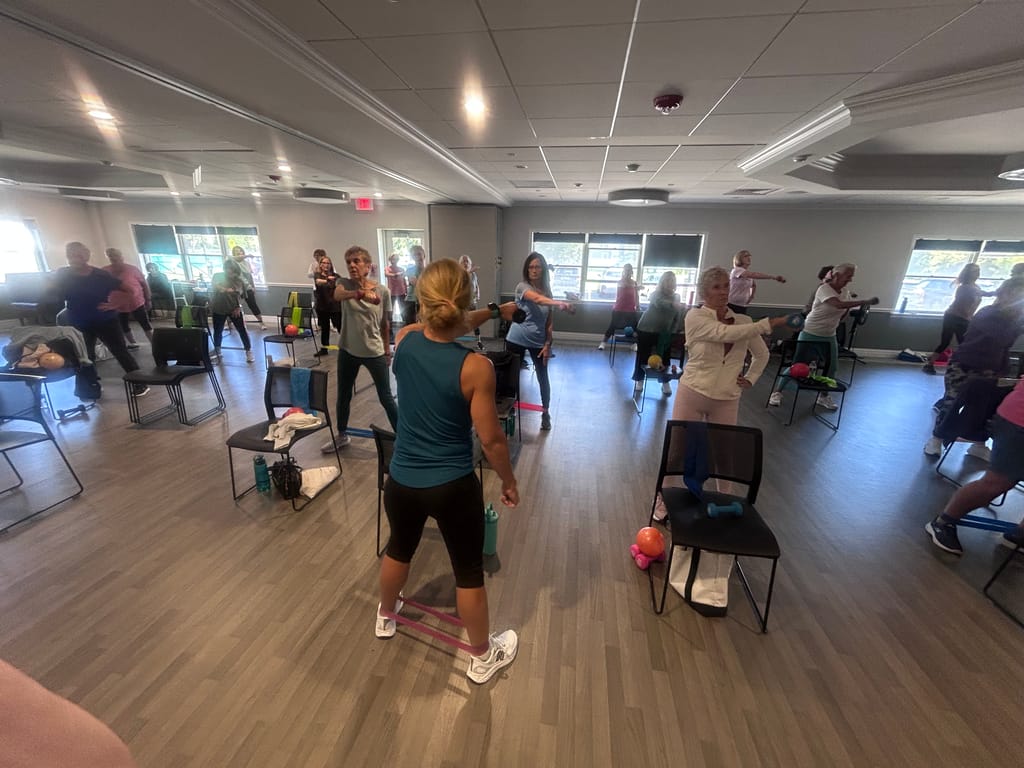
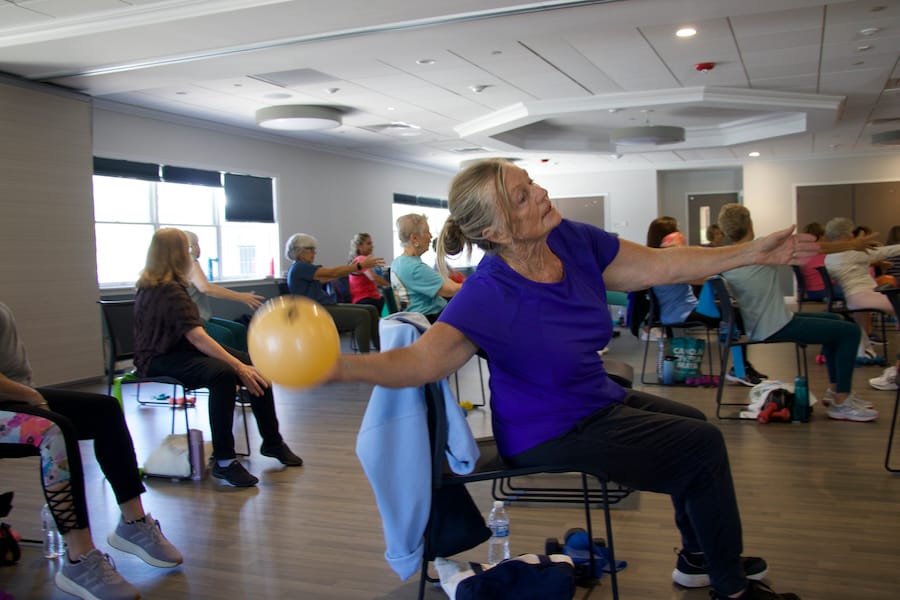
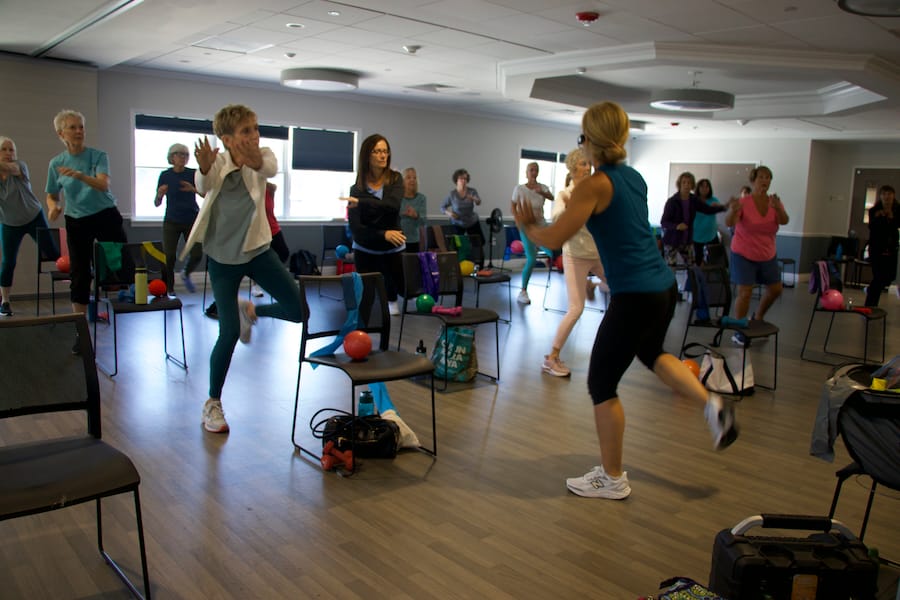
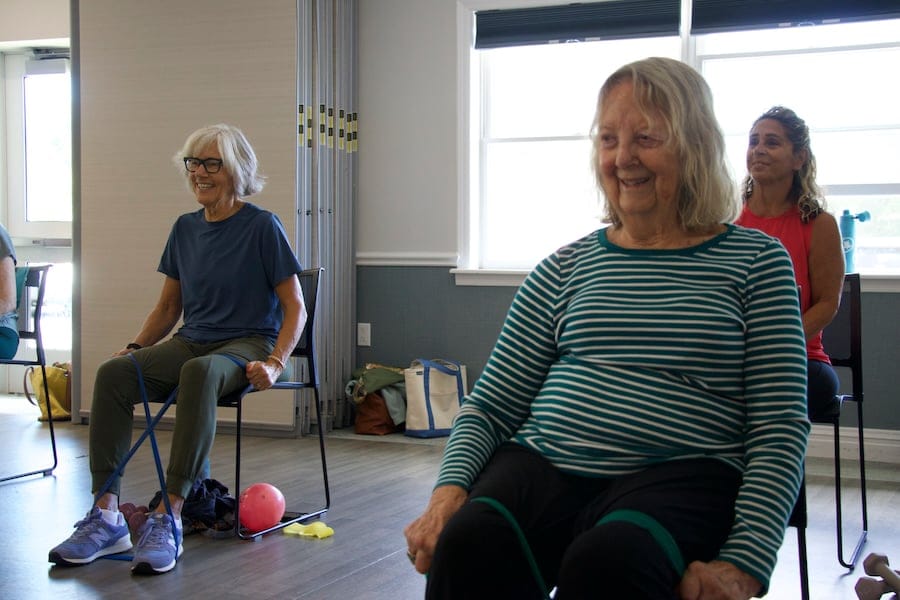
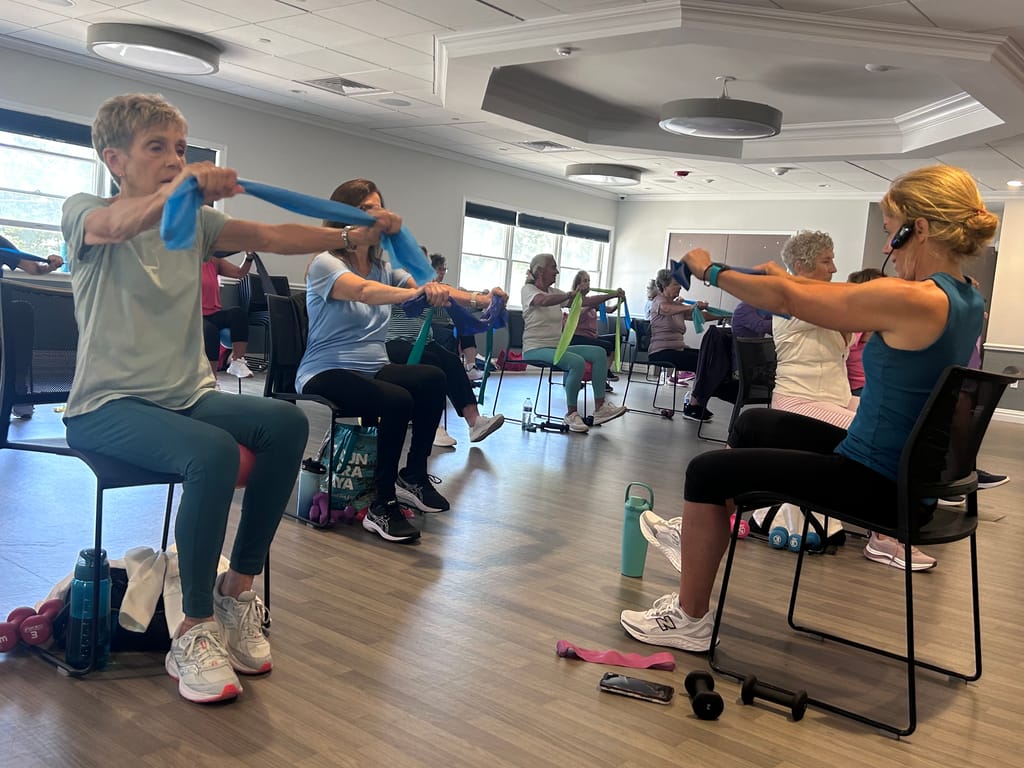
For pretty much the full hour, she’s on her feet — working with resistance bands, exercise balls and light dumbbells and taking on challenging balance drills — alongside roughly 40 other students in Jennifer Frascogna’s “Senior Flex” fitness class.
Ages in the room run from 50 to nearly 101, and most but not all participants are women.
The routine changes every week — cardio-focused one Tuesday, chair-based balance work the next. But the point stays the same: keep moving, no matter what decade you’re in. And all the while, Frascogna tosses in cognitive curveballs, like “opposite hand, opposite foot,” mid-exercise.
The class is pretty much a case study for September’s Healthy Aging Month, an annual nudge about the role physical activity plays in shaping independence, mood and longevity later in life. Adults 65 and older now make up 18% of the U.S. population, up from 12.4% two decades ago, according to U.S. Census Bureau estimates.
Long Island is aging right along with the rest of the country. If Frascogna’s Tuesday 10:15 a.m. class is any indication, plenty of people here got the Healthy Aging Month memo ages ago.
Davis, who turns 101 on Oct. 18, is proof of what that looks like.
She moved to Blue Point from Storrs, Connecticut, in 1951 and spent years as the Bayport-Blue Point librarian. She’s raised five kids and watched 17 grandkids and great-grandkids come up behind them.
She has been in some form of exercise class for at least a decade, ever since she stepped back from the library.
“Gets me up in the morning,” she said. “It’s important to keep moving. And this is also my chief social contact for the week. So it’s important to get out and see people.”
Her secret to longevity, as she tells it, isn’t complicated: “I chose my parents carefully.” Her mother lived to 97. Her dad made it into his late 80s.
The one part of class she could do without is running in place. “After that, it’s not so bad,” she said, winking and smiling.
Davis is hardly the outlier in the room. She’s simply the ceiling.
Exercise bands, dumbbells and uppercuts

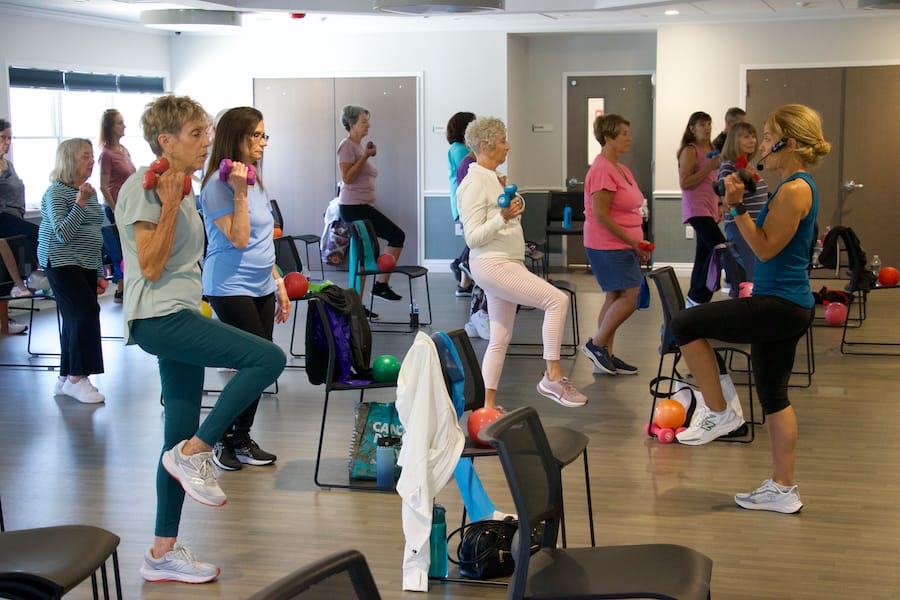
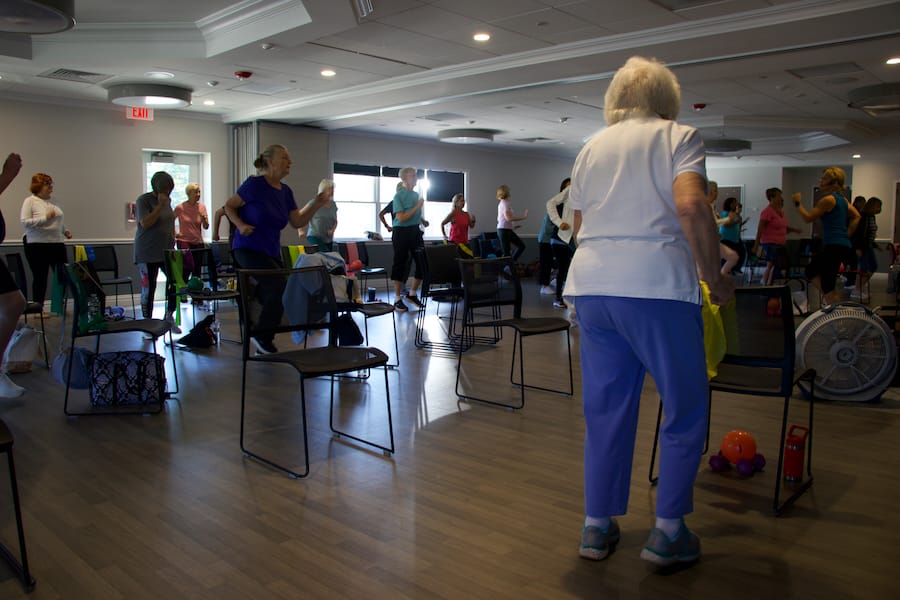
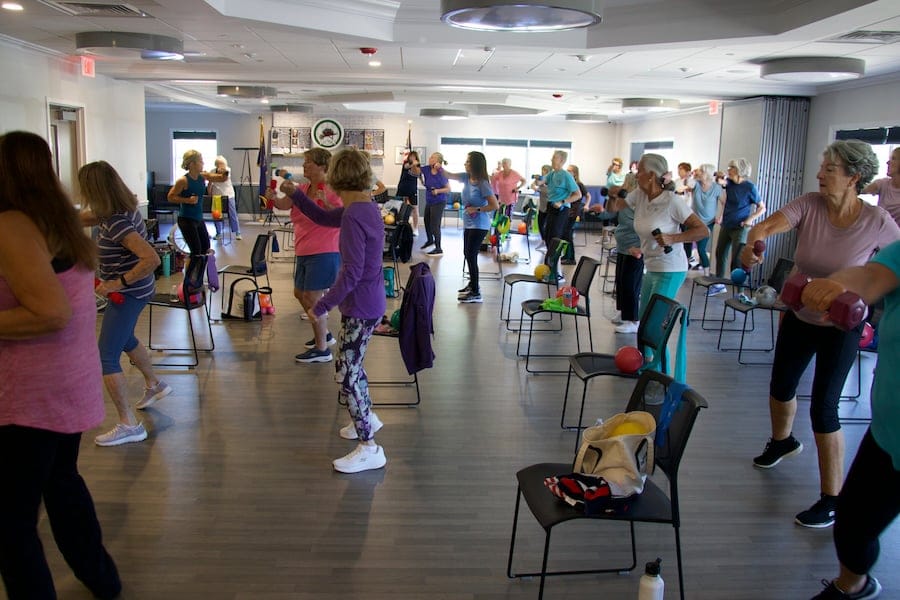
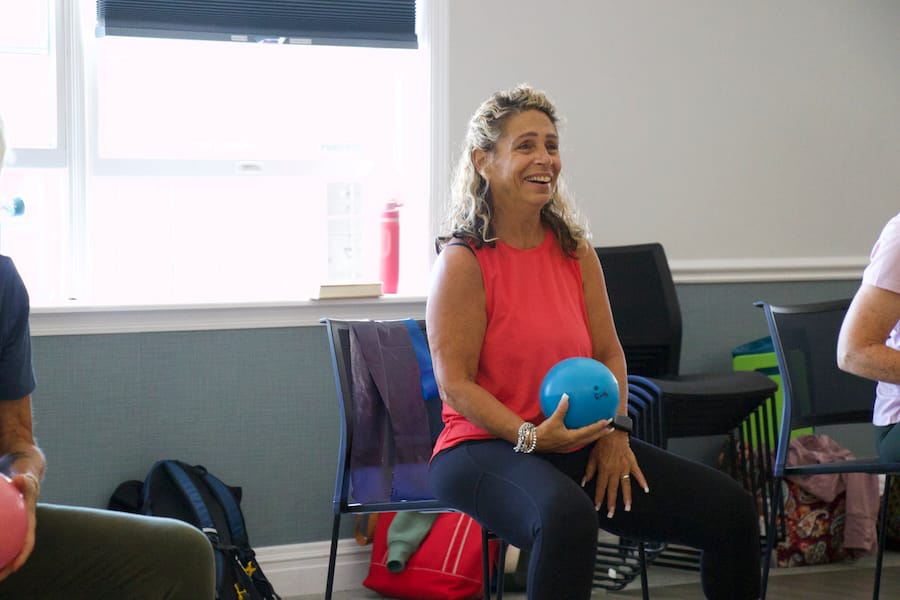
Inside the exercise room, Frascogna sets up chairs in front of each participant, but for most of the hour, they go unused.
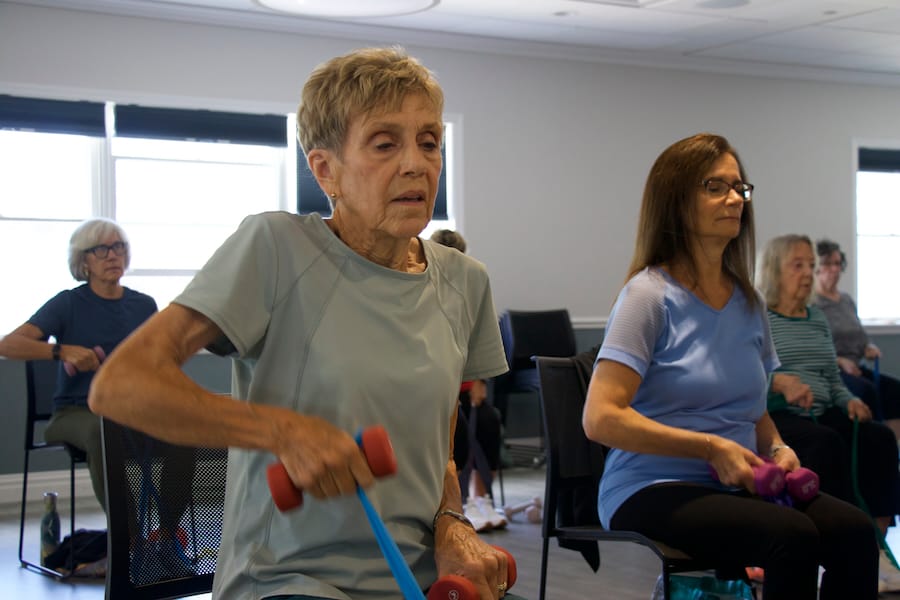
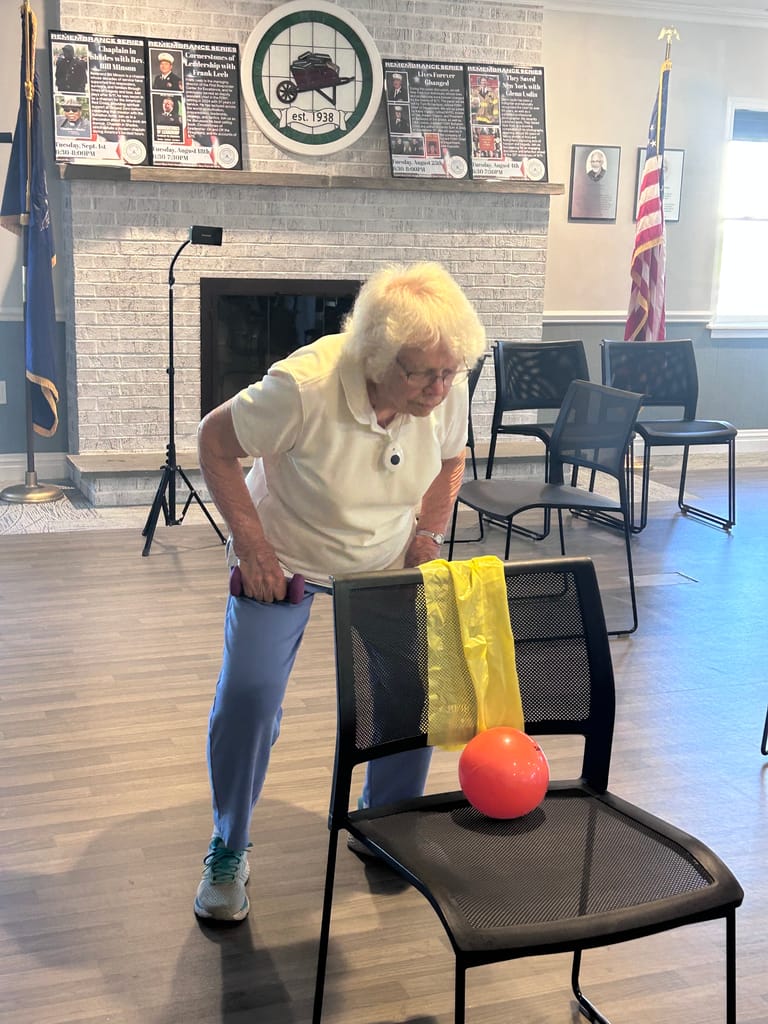
Students run in place. They do bicep curls with dumbbells in both hands while balancing on one leg, then switch it up — curling with the left arm while standing on the right foot.
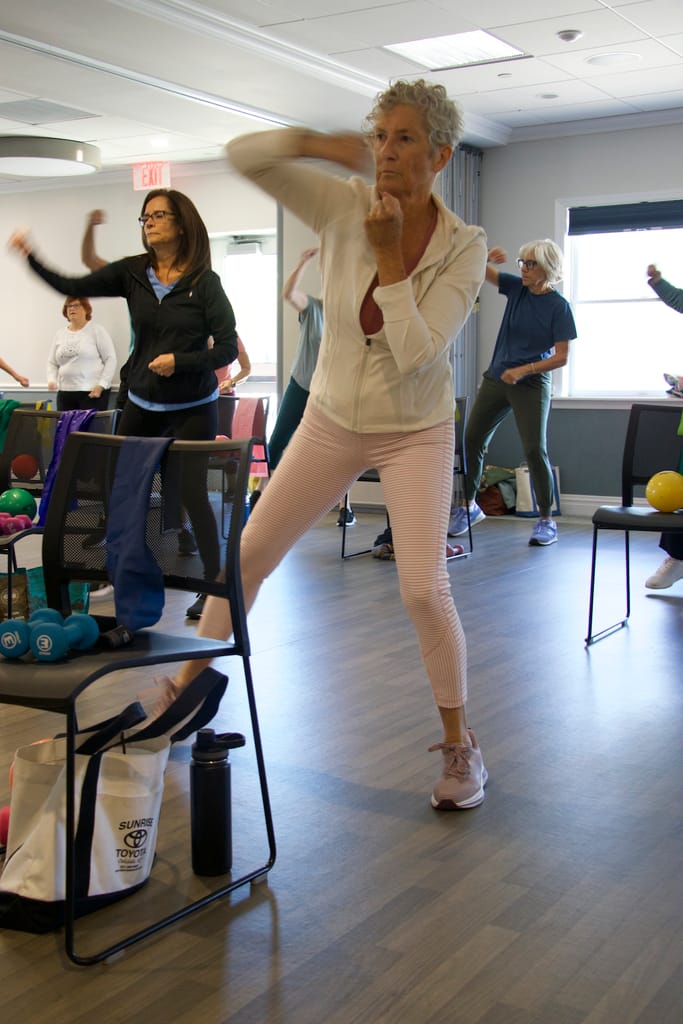
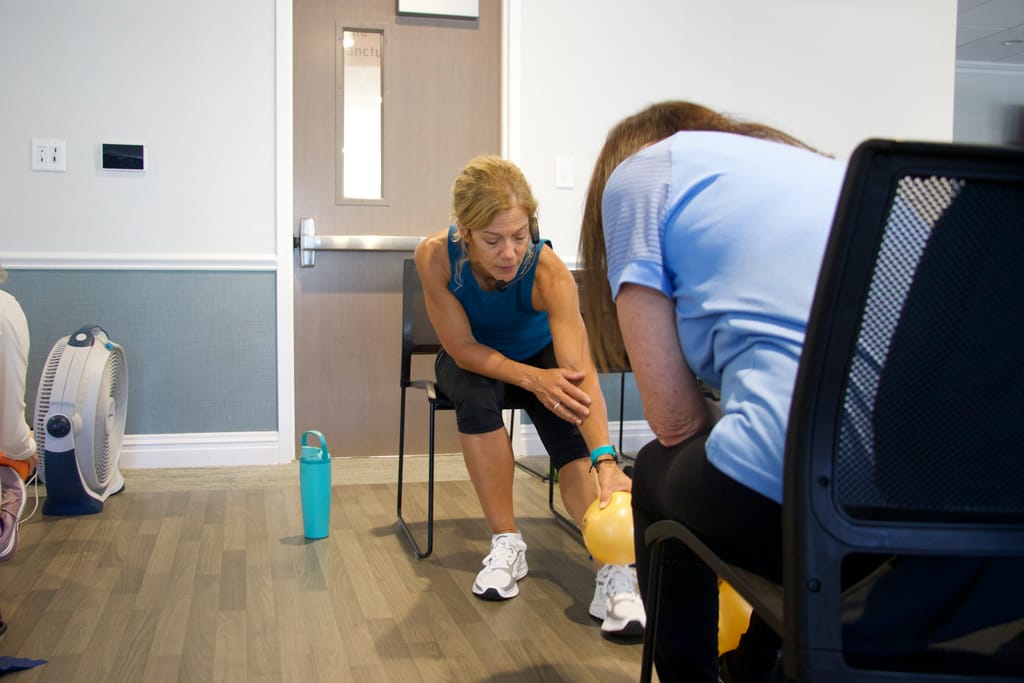
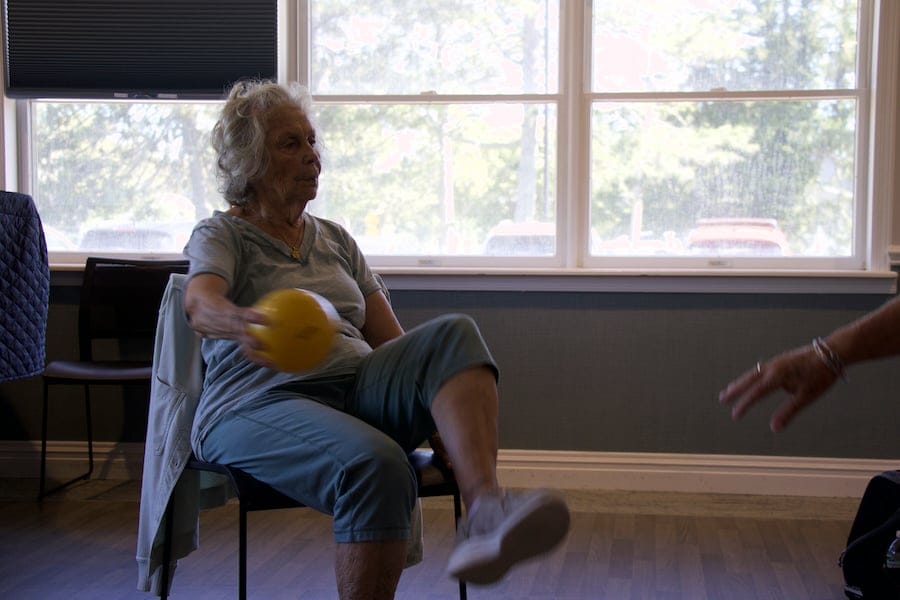
They throw punches with resistance bands — potent uppercuts and hooks. At one point, they toss small exercise balls in the air and catch them; later, finally in their chairs, they bounce those same balls off the floor and control the rebound.
Frascogna instructs her students to do what they can. But seemingly none of them take her up on the easier version — Davis included. It’s a real workout. The balance drills alone would challenge people half these women’s age.
A few feet away from Davis is Francesca Gorman, 75, a retired history teacher who taught for 33 years in Connetquot schools before trading the classroom for retirement and the exercise room.
Gorman landed here in the library exercise room after her old gym, Lucille Roberts in Holbrook, closed during the pandemic and never reopened. Now, she shows up to work out in the library twice a week, plus a Saturday session at the clubhouse where she lives. She said she also walks on the days in between.
“I feel good about doing it,” Gorman said. “It just makes me feel better physically, mentally. And it’s a social event.”
Stairs, travel, rearranging her own furniture — they all remain on the table.
“I’m not really restrained or restricted,” she said. “I can still do a lot of what I used to do.”
Changed her life


Not everyone in the room started from where Davis and Gorman did.
Annette Dellapi, 57, grew up in Blue Point and later moved back to raise her own four kids there. In her 50s, she was diagnosed with multiple sclerosis and a second autoimmune disorder, chronic inflammatory demyelinating polyneuropathy.
She started falling. Eventually she was wheelchair-bound, and she stayed inside her home for five years.
“I was just really sick and tired of being sick and tired, and I knew I had to do something,” Dellapi said.
Part of what was making her sick, she came to believe, was the treatment itself. A weekly IVIG infusion, administered by a nurse who came to her house, left her feeling weakened and ill for days at a stretch.
She eventually switched to a new neurologist, who agreed the medication wasn’t worth what it was doing to her.
About a year and a half ago, she started going to Frascogna’s classes at the library. She has since lost 50 pounds. She still uses a walker — doctor’s orders, just in case — but she no longer sits through the exercises like she once did.
“When I first started, I would sit and do the exercises. So now I stand and walk, and it’s just amazing,” Dellapi said. “I’m amazed at myself.”
Frascogna has watched the change from the front of the room. “Sometimes she cries and tells me that it’s the exercise class that has revived her,” she said.
For Dellapi, what came back wasn’t only physical.
“I isolated myself for five years. I rarely came out of my home,” she said.
She credits Frascogna for pushing her past what she thought she was capable of. “When there’s things I think I can’t do, she’ll push me, and I can do them,” Dellapi said.
Another retired teacher in the class is Donna Trombino, 79, who spent about 30 years teaching math in the Patchogue-Medford school district. She found her way to the class through an unrelated connection — she’s volunteered as a gardener at the library for years. She has been coming for two years now, usually twice a week.
“Too many people my age can’t get up off the floor. Tripping, falling. I want to avoid that,” said Trombino of Blue Point.
Upper body strength and balance were the draw, but it was Frascogna’s energy that kept her coming.
“She is so much fun,” Trombino said. “The exercises are different all the time, but they still get a complete body workout and fun.”
Frascogna also teaches aqua aerobics at the Brookhaven Aquatic Center, where one regular — a woman in her 80s from Medford, whose eyesight isn’t what it used to be — rides a bus to Mastic twice a week to get in the pool.
When the hour’s up, she doesn’t stop to dry off. She climbs out of the pool still dripping to catch the bus home.
“She tries so hard,” Frascogna said.
So many benefits

It’s a pattern Frascogna sees over and over, across every class she runs.
“They are just so positive. They’re an inspiration,” she said. “If I say this is the easier version, they always try to do the hardest.”
Perhaps more telling is the validation she’s received from outside the room.
“I had been talking to a neurologist, and he told me that I am keeping people out of his office,” she said.
The health side of it isn’t the whole story, according to Jennifer Bushati, a certified recreational therapist and dementia practitioner with more than 30 years of experience who directs recreation programming at Plattduetsche Home Society, a senior living facility in Franklin Square.
Bushati said regular physical activity can improve sleep quality, reduce anxiety and lower blood pressure while helping older adults maintain their independence. She added that it doesn’t take much. Short walks, dancing and chair-based exercise are all in play as meaningful places to get started.
“Chair-based activities can be adapted to help older adults safely maintain strength, flexibility, coordination and balance,” Bushatis told Greater Long Island. “Simple movements such as seated marching, leg lifts, arm raises and gentle stretching can support mobility and overall fitness while meeting each person at their individual ability level.
“The goal is to help older adults keep moving in ways that are safe, achievable and enjoyable so they can maintain greater confidence and independence,” she added.
The social piece is also a big component of exercise, Bushati said, while noting isolation among older adults has been linked to depression, heart disease and cognitive decline, according to the National Institute on Aging.
Budget friendly
Getting in the door for senior fitness classes like the ones led by Frascogna does not take much. Some of the library classes are free. Others run $2 a session.
Many gyms work with the SilverSneakers program and offer insurance benefits.
The low cost may help get people to class, but several students said Frascogna herself is a big reason they keep coming back — describing her as amazing. For Frascogna, the feeling is mutual.
“Everything they do is positive, and they just bring it every time we’re here,” she said. “I just love them.”
More photos from ‘Senior Flex’
Top: Brian Harmon/GLI

Your Long Island news, delivered.
Subscribe to the GLI Newsletter — its free