

Greater Port Jeff coverage is funded in part by ConnectOneBank — customized solutions for your company, no matter the industry. Click here to learn more.
They warned he ‘might break’ one day. He didn’t
Greg Durso’s tale has aired on screens in Spain, Poland and Nepal, won a “Best Film” honor in Chile and racked up award after award at festivals across the U.S.
But there’s one label Durso can do without for “Best Day Ever,” a new documentary chronicling his role in creating “gnarly” biking trails for those who, like him, have suffered spinal-cord injuries.
“The main thing for me in making this film was we didn’t want this to be kind of inspiration porn,” said the 41-year-old Stony Brook native, who was paralyzed from the chest down after slamming into a tree stump while sledding on New Year’s Day 2009.
The film highlights the volunteer-driven effort to create The Driving Range, a network of inclusive mountain-biking trails in Durso’s adopted home state of Vermont, where he has lived since 2019.
“One of my favorite quotes in the film is that you shouldn’t be inspired by my daily tasks, like going to the grocery store or getting dressed — that’s life,” he said. “You should be inspired by the changes and goals that I have in my life to create change.”
The 48-minute documentary is playing at 6:30 p.m. Thursday at the Baruch Performing Arts Center in Manhattan.
The benefit for the Kelly Brush Foundation will also feature a post-screening discussion with Durso and others from the film, as well as a silent auction whose prizes include tickets to a New York Philharmonic performance and a Rose Reading Room chair from the New York Public Library.
The Vermont-based non-profit, where Durso works as senior program ambassador, has raised more than $15 million over the last 20 years so that people with paralysis can receive grants for adaptive sports equipment that allows them to lead active lives.
The Brush foundation — whose namesake was paralyzed in 2006 while skiing competitively for Middlebury College — partnered with the non-profit Richmond Mountain Trails and local volunteers to create The Driving Range.
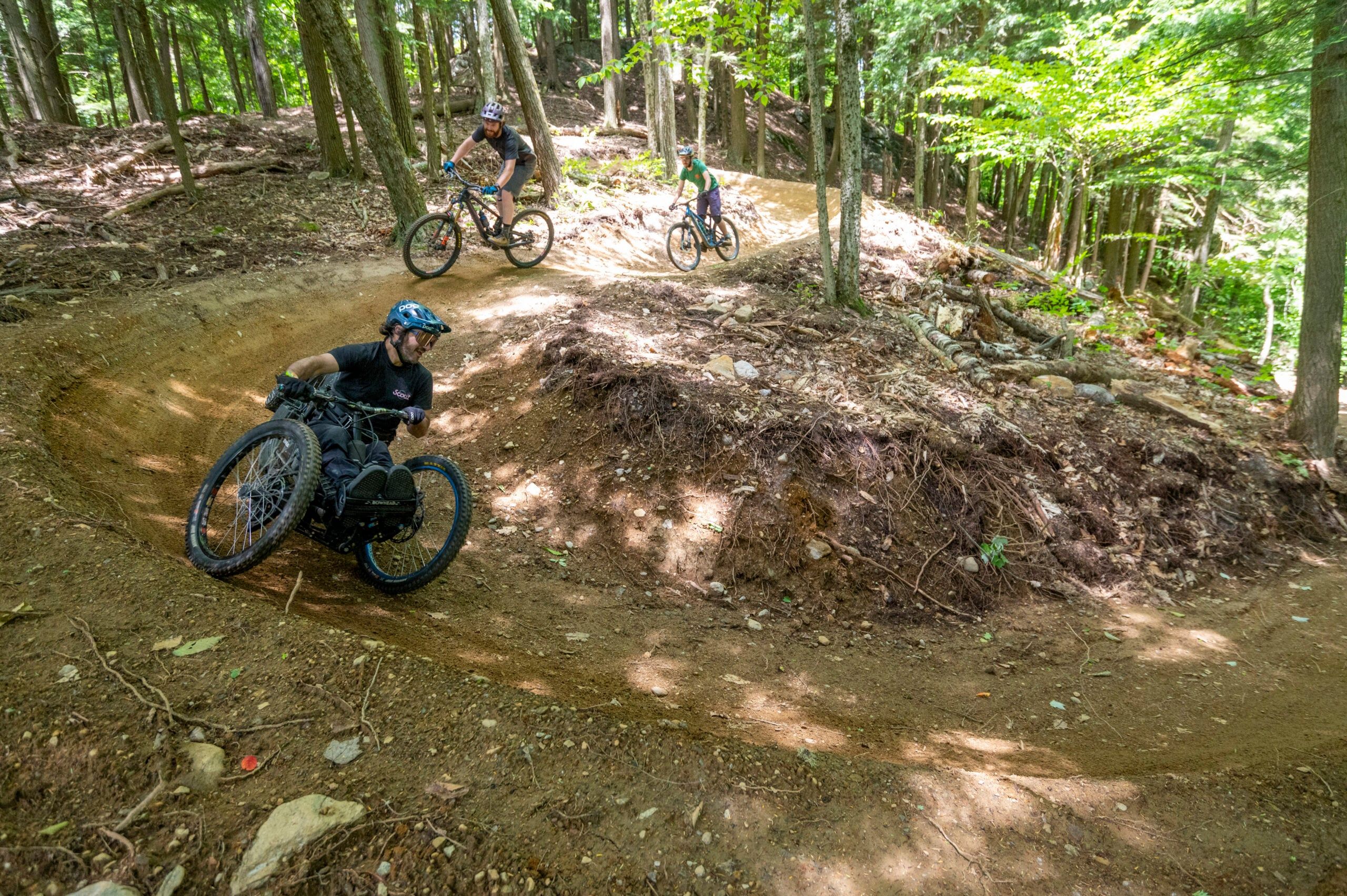
“It’s not just segregating trails for us, we’re not trying to dumb the trails down whatsoever,” Durso said. “They still can be hard, they still can be gnarly, you can still do all of that and make it work.”
“It’s not just some paved path that people think about when it comes to (the Americans With Disabilities Act) and accessibility,” he added.
Those trails help to create, as the film’s poster says, “the power of possibility” for athletes with spinal-cord injuries who ride on adaptive bicycles.
“I feel like a superhero when I get in one of those bikes,” Durso said.
The powerhouse bikes typically weigh between 75 and 100 pounds, range from 28 to 36 inches in width and are geared for anyone willing to take on an extreme course.
“The bikes you see in the film are $20,000, that’s how much they cost,” Durso said. “If you want the cheapest handcycle, which is basically like, ‘Hey, I have a spinal cord injury but I want to go ride my bike around the block with my kids, that’s going to cost $5,500 — the barrier to entry for the equipment is huge.”
The idea for “Best Day Ever” grew out of a ride Durso took with Berne Broudy, president and co-founder of Richmond Mountain Trails and also a writer and documentary producer.
“I left that ride just thinking, ‘This is so dumb, there are so many problems in the world that are not solvable — we can solve this problem,” Broudy says during the film. “Like, this is not a challenge that is insurmountable, we can make it so Greg can ride his bike and not have to be chaperoned across every bridge by his friends.”
A groundbreaking was held in May 2022 for what is billed as the world’s “first completely adaptive trail,” which officially opened in the summer of 2023.
“You could just be on the trail and you wouldn’t know it was made for our bikes,” Durso said. “That’s the genius of it.”
Story continues below trailer
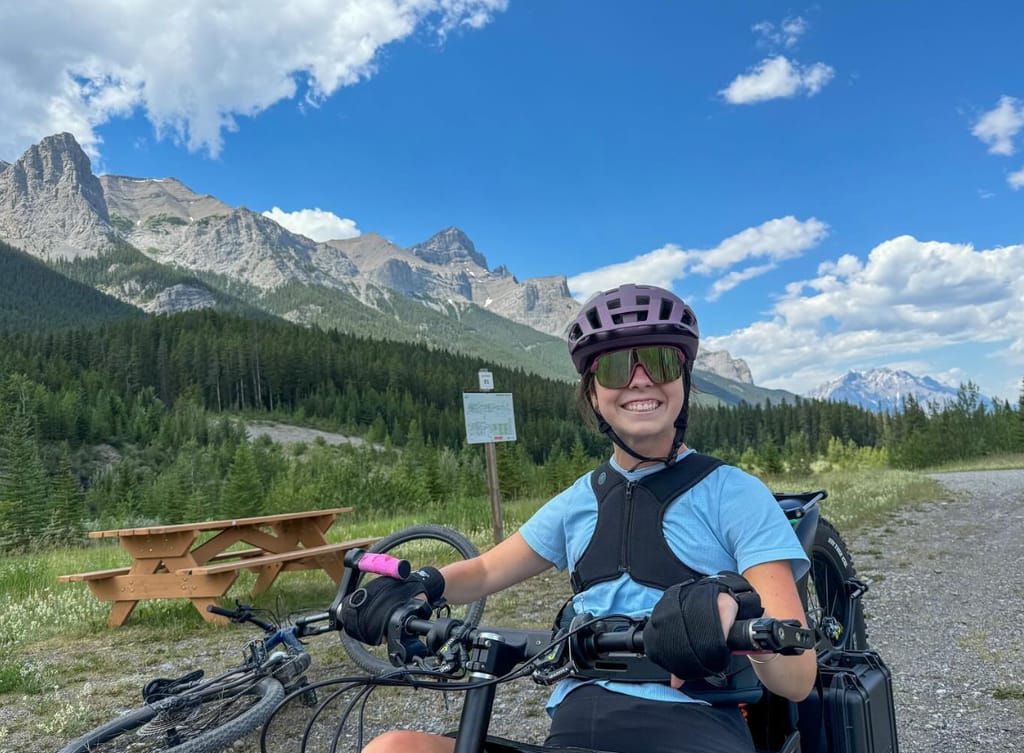
The film also features Durso’s friend, Allie Bianchi, a second-grade special education teacher who was paralyzed while mountain biking.
In the film, the former college field hockey player describes being told after her injury that she would be in a power wheelchair and need round-the-clock help.
“I basically told them f— you,” Bianchi said. “And I was like, ‘Forget you, you don’t know me as Walking Allie, you only know me as Rolling Allie.”
Similarly, Durso’s fighting spirit is on display throughout the documentary, as he takes on trails and challenges that his friends in the film describe as “Gregable.”
That attitude has been evident almost immediately after his injury, according to his older sister, Jessica Giovan.
“He knew he just wanted to live life as best he could — he never changed,” Giovan said. “He was just so motivated.”
In one scene from the documentary, Durso’s mother describes how a psychiatrist warned soon after the injury that he would “break one day.”
“She said, ‘This isn’t ever normal, I’ve never met anyone that is acting like your son and saying he’ll be fine and this and that,’” Jean Durso said.
Years later, Greg Durso’s initial ambitions have proven to be within reach.
“To this day, he never said, ‘Why did this happen to me, mom?,” Jean Durso said. “He never — he just accepted it.”
Injured just months into his first job as a commercial loan officer and after his graduation from Penn State University, Greg Durso said he took the injury as a “chance to push forward.”
“I just wanted to smile,” he said. “It’s boring to bitch and moan, I’d rather be out having fun.”
For more information on the June 4 Manhattan screening of “Best Day Ever,” visit the film’s website and click on “where to watch.”
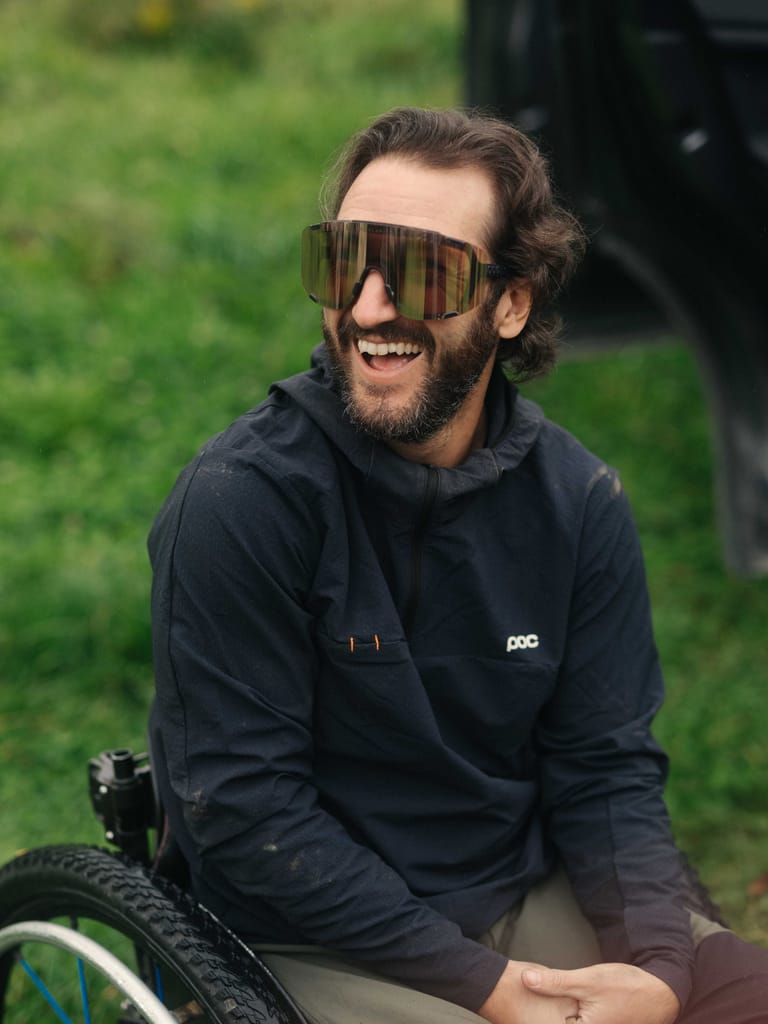
— portraits by Topspin Studios
Top: Greg Durso hits the trails at The Driving Range with friends. (Credit: Jeb Wallace-Brodeur/courtesy)

Your Long Island news, delivered.
Subscribe to the GLI Newsletter — its free