

OUR SPONSOR

Greater Bay Shore coverage is funded in part by Shoregate, now leasing brand-new premium apartment homes in the heart of Bay Shore. Click here to schedule a tour.
The glaciers that formed Long Island left behind a vast, braided network of channels that once carried meltwater to the sea. These channels still exist; today, where they meet the water table, they carry groundwater to the sea in the form of rivers, creeks and streams.
There are approximately 150 of these coastal tributaries across Long Island; more than 40 flow into the Great South Bay alone.
For thousands of years, these tributaries were an important part of what was once a remarkably rich coastal ecosystem. They connected land to sea, providing a vital link between upland habitats and the marine environment.
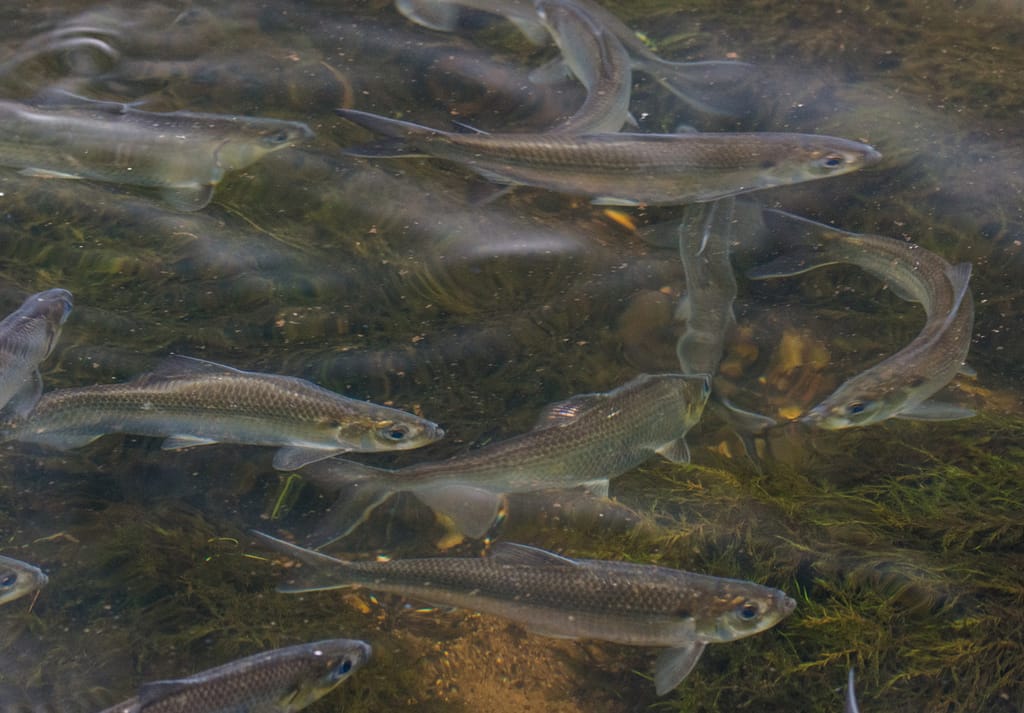
A central component of this connection was the unique fish that swam between salt and fresh water, splitting their life-cycles between tributaries and bays and oceans. These species – river herring, American eel and sea-run brook trout – were a key part of our coastal food web. They transported ocean energy into the rivers and provided forage for countless other species, from striped bass and bluefish to river otters and osprey.
Unfortunately, the ecological role of Long Island’s tributaries has largely been under-appreciated. As a result, these water bodies have been undervalued and mistreated for centuries.
From historic impoundments for mills to ever-encroaching development, our tributaries have been significantly degraded and their ecological functions severely compromised.
Most significantly, dams and culverts have blocked the ability of migratory fish to move between fresh and salt water. As a result local populations of these important fish have been decimated.
But there still reason for hope.
River herring, for example, are still found trying to migrate into our rivers and streams each spring. There are nearly two-dozen tributaries on Long Island where these “remnant runs” have been documented. Several were discovered in just the past few years.
The river herring in these systems go as far upstream as they can and spawn in sub-optimal conditions where they hit a barrier. Their spawning success rates plummet and their populations steadily decline, but (for now at least) they’re still coming.
The exciting thing is that if we “reconnect” our tributaries and make freshwater habitat available again, these fish will rebound. In the Carmans River, when a fish ladder was installed on the Hards Lake Dam in 2008, river herring started using it almost immediately.
In the Peconic River, the construction of a “rock ramp” in 2011 has allowed the river herring run to explode, perhaps now reaching as many as 100,000 fish. It’s like the old baseball movie: if we build it, they will come!
But fish ladders alone are not the answer. They can be expensive (both to install and maintain) and they’re only a partial fix. They don’t address the underlying ecological damage done to our tributaries by dams and the impoundments they create (a.k.a. lakes and ponds).
By slowing water down and letting it sit in the sun, dams significantly increase water temperatures, which has a negative impact on myriad species. They also capture sediment, which is needed downstream in marshes and bays. And even with fish ladders in place, they can still block the movement of fish, mammals and other species.
Dams are also expensive. In addition to regular required maintenance, there’s the often very costly issue of keeping the impoundments behind them free of silt and aquatic vegetation. The Town of Brookhaven recently spent $4 million to dredge an impoundment on the Carmans River so it would have some open water!
Not every dam on Long Island is a good candidate for removal. While almost none continue to serve their original purpose, many are an integral part of their communities or have significant recreational or economic value. Still, there are many more that have limited community value or only benefit a few people.
It’s time we start looking at opportunities to remove dams on Long Island. By letting our rivers run, we’d restore their proper role in our coastal ecosystem and rebuild populations of migratory fish.
All Long Islanders would benefit from the cascade of ecological effects that would result.
Enrico Nardone is the Executive Director of the Seatuck Environmenal Association. In March, Seatuck launched the “Long Island River Revival Project,” an island-wide effort to restore the ecological health of the region’s coastal rivers and streams. More information can be found at www.seatuck.org.
Top photo: A great egret scooping up bait fish in East Patchogue’s Swan River Preserve. (Credit: Luke Ormand)

Your Long Island news, delivered.
Subscribe to the GLI Newsletter — its free