
Greater Moriches coverage is funded in part by Peconic Bay Medical Center, a place that is here for life’s most defining moments.
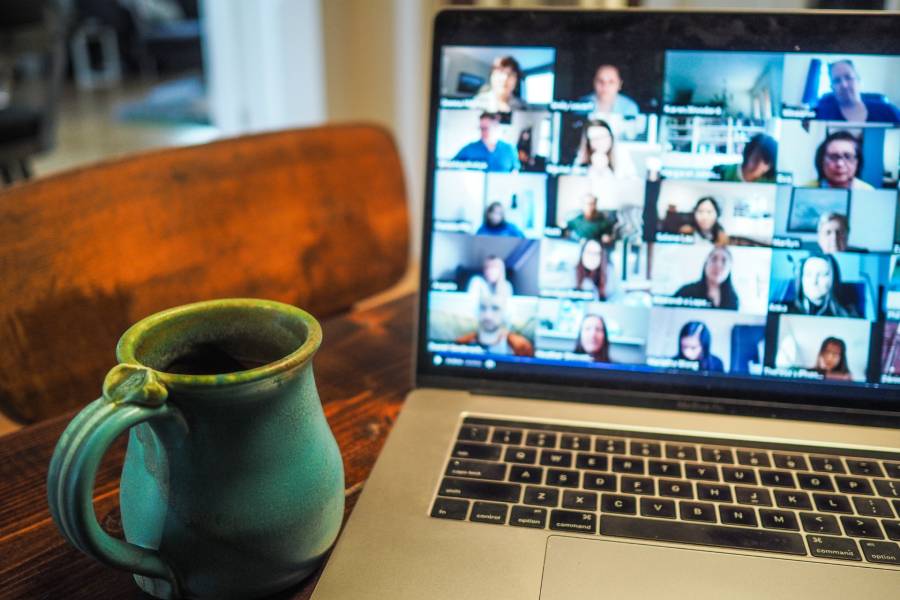
My new semester as a professor at SUNY Old Westbury began this week and I’m teaching online. Most classes at the college are online other than those dependent on-campus facilities such as courses utilizing science labs, art studios and media production.
It’s quite a transition from “face-to-face” to “virtual.”
As a college professor—and I’ve been at Old Westbury since 1978—I emphasize performance in my teaching. This is, in part, from my own college experience which includes a few boring professors. Also, I think performance might be in my blood. My maternal grandfather, Joseph Hyman, as a child was in the Yiddish theatre troupe of Boris Thomashefsky. My brother, Stefan, is a famous blues guitarist. Our cousin, Steve Grossman, who died last month, was a jazz saxophonist who played with Miles Davis and Elvin Jones. Jon Fadem, a cousin’s son, is an outstanding funk/rock/blues guitarist.
My barometer for teaching in my first year at Old Westbury was Stephen White.
Stephen couldn’t stand being bored. When a presentation got dull, his eyes would close. Making my teaching lively and interesting and keeping Stephen wide-eyed and engaged became my mission—and model for the next 42 years. He went on to graduate school at Stony Brook University and a promising career, but Stephen, an African-American, was shot dead by a police officer in Nassau County.
I think I do pretty well as a professor. I’ve been regularly promoted, and at SUNY Old Westbury excellence in teaching is vital for promotion. Also important: writing books—I’ve authored six—and college and community service. I’ve risen up the academic ladder to full professor.
When the Covid-19 plague hit and we received training at the college for “distance learning” for the rest of the spring semester, and possibly beyond, I wondered how I’d be able to adjust my teaching to online pedagogy. Several decades ago, teaching “remotely” would have been impossible. Now, with advances in computer technology and programs, notably Zoom, and most students computer savvy—far more than me—it can be done. The issue: the need for students to have the essential equipment and Internet access.
Is “online learning” the equal of “face-to-face”? I don’t think so.
I am comfortable with appearing on video online having for five years co-anchored the evening news on the Long Island TV station WSNL-67 and I’m now completing my 30th year hosting the nationally-aired TV program “Enviro Close-Up with Karl Grossman.”
My major two courses are Investigative Reporting and Environmental Journalism.
How best to adopt them to online teaching?
In Investigative Reporting, my first assignment is students writing essays on a “social injustice” they’ve known. The aim is to help them understand the role a whistleblower often has in the investigative reporting process. As my syllabus says: this will be “an essay you will read to the class on a social injustice you have personally known—an inequity, a wrong that you have personally experienced. Whistleblowers, sources who reach out to investigative journalists, are generally people who have observed corruption, abuses, inequity, unfairness, danger.”
Many of the stories the students tell are heartbreaking, upsetting—and some could be the basis of investigative pieces. For this exercise, I have the chairs in the classroom placed in a circle enabling the students to feel support from each other. Will reading their essays from home, told one-by-one through a computer screen, also work? We’ll see.
The course’s next phase involves how to document and present—for print, Internet, radio and TV—the information that was the “conception” for an investigative piece. Then there are lectures and student readings on the history of investigative reporting.
I begin the Environmental Journalism course with the issue of environmental justice, also known as environmental racism. For decades, I’ve written and done “Enviro Close-Up” programs about this. A central focus is toxic facilities placed far disproportionately in Black and Latino communities. Next week I’ll show the students online my most recent “Enviro Close-Up” on environmental justice, send them articles to read, and via Zoom we’ll have a discussion. The course includes students doing pieces on environmental issues and an examination of the history of a branch of journalism that started with nature writing and took its contemporary form with Rachel Carson and her landmark 1962 book “Silent Spring” exposing the dangers of pesticides.
My other main teaching activity is running an Internship in Journalism and Media program, in which students are placed at newspapers, Internet sites, TV stations and networks, radio stations, magazines and PR firms. (A college internship is how I got into journalism.)

Your Long Island news, delivered.
Subscribe to the GLI Newsletter — its free